

Skip to content

The Ataxia Community Comes Together in Orlando April 9–11, 2026 for the Annual Ataxia Conference! LEARN MORE

Snapshot: What is Electromyography (EMG)?

Electromyography, or EMG, is a technique for measuring the electrical activity of skeletal muscles—the muscles that connect to bones and support movement.  

When our muscles contract, the tissue produces tiny electrical signals. This electrical activity results from the conduction of specialized peripheral nerves (nerves located outside of the brain or spinal cord), called motor neurons, that connect to and stimulate muscle fibres. These signals can be recorded and analyzed to assess the health of our muscles and the nerves that control them. 

EMG is widely used in medicine and research to diagnose and study neuromuscular disorders. In medicine, a clinician may use EMG to help diagnose a wide range of conditions, such as peripheral neuropathy (damage to the peripheral nerves) and ataxia (lack of voluntary muscle coordination). In research, scientists often use EMG to study how particular diseases or treatments affect neuromuscular function. 

How Does EMG Work?

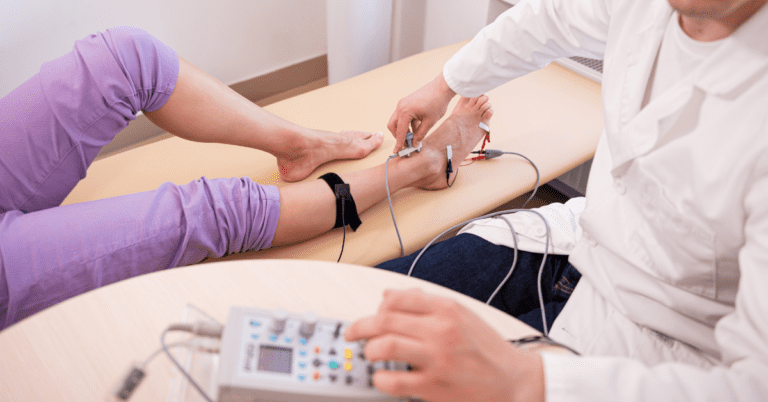
During an EMG test, a neurologist or other clinician inserts one or more thin needles through the skin into a muscle. These needles—called electrodes—detect local electrical activity and send the signals to a machine called an oscilloscope, where they are displayed as wave-like patterns on a screen. Sometimes, the recording is paired with another machine that translates these signals into sounds. In this case, you can hear popping sounds whenever the muscle contracts, with faster popping indicating stronger muscle contractions. The clinician analyzes the EMG signals to determine how particular muscles and nerves behave under different levels of effort. 

EMG recordings are made when a muscle is at rest, during light contraction and during strong contraction. For example, if you are having an EMG test done on a muscle in your forearm, you might be asked to make and tighten a fist. In this case, as you are sitting with your hand relaxed, the EMG would normally show no electrical activity. However, as you gently make a fist, the EMG would detect electrical activity as your arm muscles begin to contract, and this activity would increase as you squeeze your fist tightly, indicating stronger muscle activity. Irregular activity patterns may indicate nerve damage, muscle disease, or improper communication between the nerves and muscles. EMG is often used in combination with other tests, such as nerve conduction studies, to provide a fuller picture of neuromuscular health. 

EMG and Ataxia

In ataxia, symptoms like muscle weakness or a loss of fine motor skills may result from nerve degeneration or impaired neuromuscular communication. EMG can detect these changes. For example, if someone with ataxia has trouble gripping objects, their doctor might use EMG to check if the issue is caused by changes to the muscles or to the nerves that control them. 

Spinocerebellar ataxia (SCA) is a genetic form of ataxia associated with progressive damage of peripheral nerves, causing widespread motor impairments. If you have this condition, your doctor might use EMG to track changes in your nerve and muscle function over time. This approach will help them monitor disease progression and make personalized treatment recommendations. By understanding what happens to the nerves and muscles in different forms of SCA, doctors can manage symptoms more effectively and develop better care plans for their patients.  

EMG is also a valuable tool for SCA research. Scientists often use this technique to study how the activity of nerves and muscles change as a condition progresses, and to test if and how new treatments preserve nerve and muscle health. 


If you would like to learn more about Electromyography (EMG), take a look at these resources by MedlinePlus and Johns Hopkins University. 

Snapshot Written by: Chloe Soutar, PhD

Edited by: Priscila P. Sena

Read Other SCAsource Snapshot Articles

Snapshot: What is RFC1?

RFC1 is a gene that encodes for replication factor C subunit 1, a component of the protein replication factor C (RFC), which plays an important role in DNA synthesis. RFC Read More…

Translate »

Join the Ataxia community today!

Become a free member for exclusive content from NAF.