

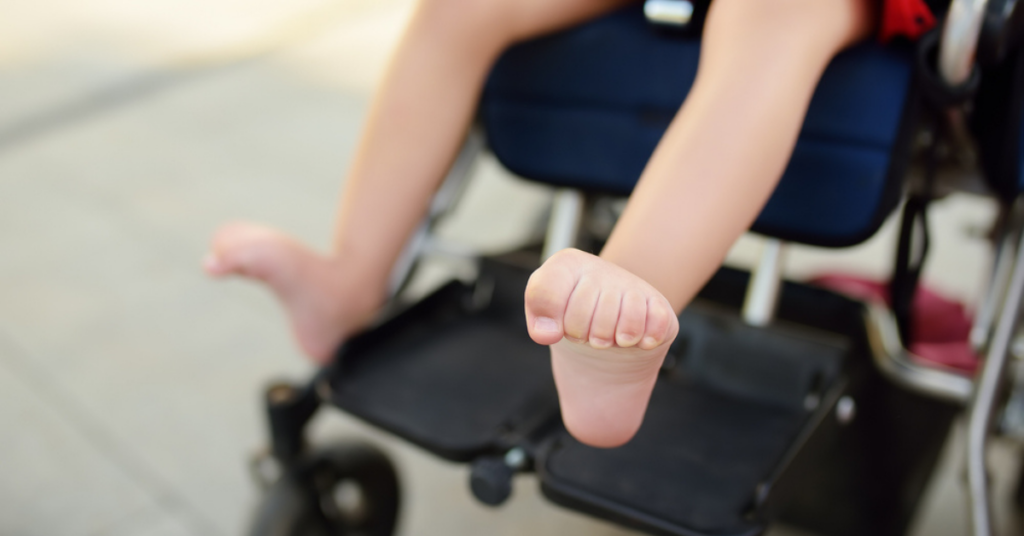

Spasticity is a condition where muscles involuntarily stiffen, impeding normal smooth movements. Spasticity can present in varying severities with varying impacts on daily life.
For example, minor spasticity resulting in overly stiff muscles can make precise, dextrous tasks difficult, whereas painful, uncontrollable muscle spasms can cause confinement to bed rest. Spasticity is particularly harmful to young children since it can prevent normal muscle growth by causing deformities of the muscles and joints and improper functioning of muscle cells.
Consequently, spasticity may affect walking (gait), regular bodily movements, and speech, leading to long-term complications like chronic constipation, urinary tract infections, pressure sores (skin damage caused by resting in the same position for too long typically), and systemic illnesses.
What causes spasticity?
Normally, the brain controls muscular movement through motor neurons and nerve tracts that connect the brain to every muscle in the body. The brain sends a series of ‘stop and go’ signals through nerve tracts to muscles. These cause muscles to either start moving (with a ‘go’ signal) or stop moving (with a ‘stop’ signal) in a smooth, organized fashion.
However, if this pathway is malfunctioning, which occurs in some ataxias, multiple sclerosis, cerebral palsy, or following a brain or spinal cord injury, these stop/go signals become imbalanced and disorganized. This ultimately results in over-active motor neurons, triggering muscles to lock up.
Diagnosis and Treatment
Standard practice for diagnosing spasticity begins with a neurological exam that seeks to identify spasticity and its severity. This sometimes includes magnetic resonance imaging (MRI) to obtain clear images of brain structures which can help identify regions of damage that may cause the spasticity.
Spasticity is commonly treated with a combination of approaches to maximize the impact on the patients’ quality of life. These treatments may include physical therapy, occupational therapy, medications, paralytic injections, casting/bracing, or surgery.
Physical and occupational therapy can be used to improve the mobility of muscle groups through strength, flexibility, and coordination exercises. Oral medications can prevent the overactivity of motor neurons seen in spasticity by addressing the stop/go signal imbalances of the nervous system. Paralytic or Botox injections are used to selectively paralyze the spastic muscles. Casting is the application of several casts placed to stretch a joint, thereby increasing its range of motion and ultimately improving the mobility and positioning of the joint.
Lastly, two types of surgery may be offered as a last resort, due to their invasive nature. The first type inserts a pump that continually releases medications directly into the spinal fluid to address the overactive neurons. The second type involves cutting specific overactive, spastic neurons which effectively reduces muscle stiffness.
Together, spasticity is widely varying condition in terms of severity and in turn has many successful treatment options available to be tailored to the patient’s individual needs.
If you would like to learn more about spasticity, take a look at these resources by the National Institute of Neurological Disorders and Stroke and the American Association of Neurological Surgeons.
Snapshot Written by: Paige Chandran Blair
Edited by: Dr. Larissa Nitschke
Read Other SCAsource Snapshot Articles

Snapshot: What is the cerebellar cognitive affective syndrome (CCAS) scale?
Cerebellar cognitive affective syndrome (CCAS) is a condition where cognitive and emotional abilities are affected due to cerebellar damage. Historically, the cerebellum was identified as the part of the brain Read More…

Snapshot: What is RFC1?
RFC1 is a gene that encodes for replication factor C subunit 1, a component of the protein replication factor C (RFC), which plays an important role in DNA synthesis. RFC Read More…

Snapshot: What is the Brief Ataxia Rating Scale (BARS)?
How do you accurately measure something as nuanced as coordination? For clinicians assessing ataxia, this question has driven the development of various rating scales. The Brief Ataxia Rating Scale is Read More…