What drives the progression of Spinocerebellar ataxia type 6 (SCA6)? While the exact mechanisms remain unclear, a study by Leung et al. suggests that mitochondria dysfunction in SCA6 patients may be one of the answers. Understanding this connection could open doors to new treatment strategies and provide ways to slow disease progression.
Spinocerebellar ataxia type 6 (SCA6) is a rare neurological disease typically diagnosed in midlife. It leads to progressive motor impairments due to an expansion of CAG repeats in the CACNA1A gene. Understanding the cellular mechanisms of SCA6 is crucial for better insights into the disease.
Since the cerebellum controls movement, the study primarily focused on this brain region. The cerebellar cortex consists of three layers: the molecular layer, the Purkinje cell layer, and the granule cell layer. While Purkinje cells are known to be the primary neurons affected in SCA6, this study revealed that other neurons in the cerebellar cortex are also impacted.
To explore the cellular mechanisms underlying SCA6, researchers used a mouse model for the disease and performed RNA sequencing on seven-month-old wild-type and SCA6 mice, a stage equivalent to early disease onset in human. By comparing the results, they identified a widespread gene dysregulation caused by CACNA1A mutation in the SCA6 mice. Some affected genes are well-known, such as those related to behavior, while others were identified for the first time. Among the impacted genes, those connected to mitochondrial function were significantly downregulated, indicating impaired energy production.
The mitochondria irregularity is identified in other types of spinocerebellar ataxias, such as SCA1 and SCA7, and other neuronal diseases, such as Alzheimer’s and Parkinson’s disease. However, this study was the first to identify it in SCA6. The researchers then explored mitochondrial dysfunction in SCA6 through several aspects:
1) Declining mitochondrial membrane potential at the disease progression state
Mitochondrial membrane potential is essential for ATP (energy) production. Researchers measured it using TMRE signal, a fluorescent dye that detects mitochondrial activity. At disease onset (7 months old), there were no significant changes. However, at disease progression (12 months old), a significant reduction in mitochondrial membrane potential was observed in Purkinje cells and other neurons, indicating impaired energy production.
2) Increased oxidative stress at the disease progression state
The change in mitochondrial membrane potential often leads to oxidative stress, which damages cells. A way to measure the oxidative stress is by measuring the levels of reactive oxygen species (ROS). Researchers measured it at 9 months (early stage) and 12 months (progression stage). No changes were found at the early disease stage, but by 12 months, oxidative damage had accumulated in the Purkinje cells and interneurons in the molecular layers. These results indicated that cells suffered from broader negative effects.
3) Mitochondrial damage progresses over time
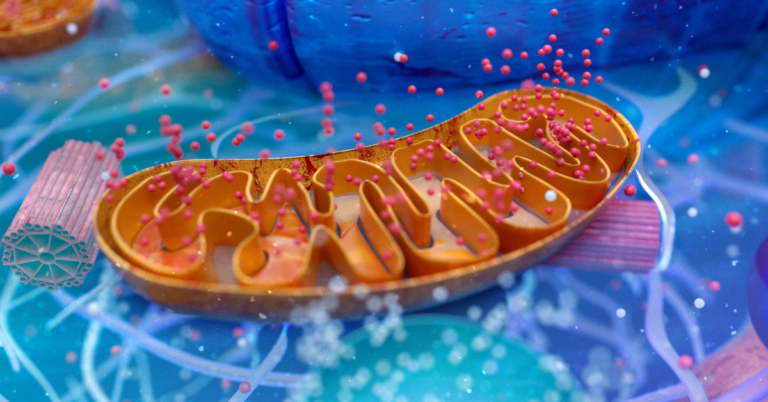
With the unhealthy cellular situation of mitochondria, the researchers further examined the mitochondria morphology in the Purkinje cells. They used electron microscopy to check the structure of mitochondria at 9 months (early stage) and 18 months (late stage). At the early stage, the number of mitochondria remained similar between SCA6 and healthy mice, but SCA6 mitochondria showed signs of damage. At the late stage, the number of mitochondria remained stable, but their condition worsened, with even more severe damage.
4) Impaired mitophagy in SCA6 Purkinje cells at the late stage
Mitophagy is the process by which damaged mitochondria are cleared from cells. Previous findings indicated that mitochondria were damaged, but the number of mitochondria stayed the same in the disease, which could indicate defective mitophagy in SCA6. The researchers assessed mitophagy at 7 months (disease onset) and 18 months (late stage). They found no significant changes at onset but, at 18 months, mitophagy was significantly reduced, leading to the accumulation of damaged mitochondria.
To validate their findings in humans, researchers also examined mitochondrial function in SCA6 patients. A two-fold increase in lactate (a marker of impaired energy metabolism) was observed in SCA6 patients. Additionally, elevated levels of other metabolites related to oxidative phosphorylation indicated damage in mitochondrial energy production in patients, further supporting the findings in the SCA6 mouse model.
This research provides the first evidence that mitochondrial dysfunction is involved in SCA6 progression. While Purkinje cells have long been considered the primary cells affected, this study reveals that other neurons, such as interneurons, are also impacted. Since mitochondrial damage worsens as the disease progresses, it may contribute directly to the deterioration observed in SCA6.
In the future, targeting mitochondrial function could represent new treatment opportunities. In addition, monitoring mitochondrial health could serve as a potential biomarker to track disease progression and evaluate therapeutic approaches.