

Skip to content

Join the Summer Match Challenge! All donations during the month of June will be matched by the Clementz-Peterson Family Fund and an anonymous donor, up to $100K. DONATE

SCA6

Moving Heals! Exercise and a TrkB Agonist Offer New Hope for SCA6

Written by Élyse Zadigue-Dubé   Edited by Priscila Pereira Sena New research in SCA6 mouse models suggests boosting BDNF-TrkB signaling could change the game. Is there a world where an SCA6 diagnosis does not equate to a life sentence of motor incoordination? A study by Cook and colleagues investigated a signaling Read More…

Corriendo con la energía en vacío: Comprendiendo como la fatiga afecta la calidad de vida en las ataxias espinocerebelosas

Escrito por Alexandra Putka  Editado por la Dra. Pragya Goel  Traducido por Daphne Rincon  ¿Te sientes cansado(a)? No estás solo(a). La fatiga es un síntoma común de las ataxias espinocerebelosas y afecta la calidad de vida.   Las ataxias espinocerebelosas (también reconocidas como SCAs) se caracterizan por diversos síntomas, pero la fatiga no siempre está incluida en esta lista. Clínicamente, la fatiga se define como la dificultad para iniciar Read More…

Moving forward with movement sensors for ataxia

Written by Carrie Sheeler, PhD    Edited by Celeste Suart, PhD Advances in wearable technology for tracking ataxia severity combine coordination changes across different types of movement.  How do you know a new treatment is working? This is the key question that clinicians have to answer when developing and testing new therapies. One on one, a patient Read More…

24/7 Wearable Sensors: A New Way to Track Ataxia

Written by Poojashree Chettiar Edited by Pragya Goel, PhD AI and wearable tech may transform how ataxia is monitored Could everyday devices help track ataxia? Finding treatments for neurological disorders like spinocerebellar ataxias (SCAs) and multiple system atrophy (MSA-C) has been challenging. A major reason is the lack of good Read More…

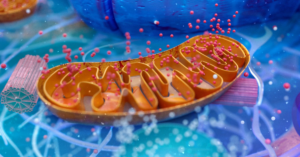
Unraveling the Role of Mitochondria in SCA6 Progression

Written by Yujia Li Edited by Priscila Pereira Sena The discovery of first links between mitochondrial dysfunction and SCA6 progression offers new insights for potential treatments. What drives the progression of Spinocerebellar ataxia type 6 (SCA6)? While the exact mechanisms remain unclear, a study by Leung et al. suggests that Read More…

Snapshot: What is Brain-derived neurotrophic factor (BDNF)?

BDNF stands for Brain-derived neurotrophic factor. BDNF is a protein found in the brain that belongs to the group of neurotrophic proteins. Neurotrophic means that these proteins promote the survival and growth of new neurons during brain development and the survival and function of existing neurons in the adult brain. Read More…

Snapshot: What is CACNA1A?

CACNA1A is a gene that contains the genetic information needed to make a transcription factor and a part of a calcium channel. The gene is mainly expressed in the brain and is pivotal to various neuronal functions such as muscle contractions, memory, learning, and gene expression. Mutations in CACNA1A has Read More…

Translate »

Join the Ataxia community today!

Become a free member for exclusive content from NAF.