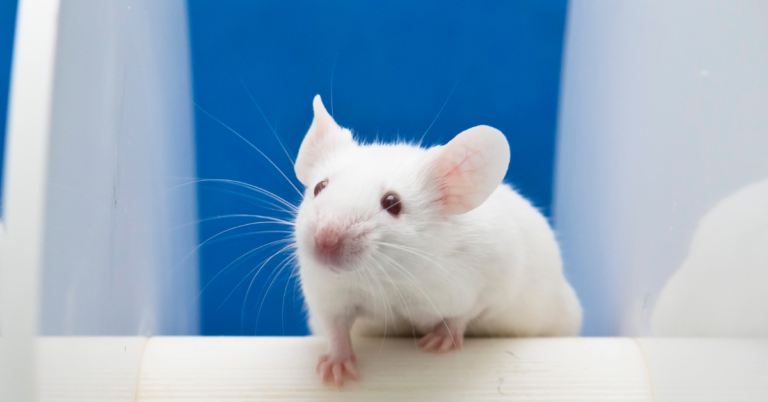
In Afonso et al. 2022, the authors set out to understand how age influences the development of symptoms in spinocerebellar ataxia type 2 (SCA2). While it’s known that SCA2 worsens with age, it was not clear whether this was simply due to disease progression over time or whether age itself makes the brain more vulnerable to damage from mutant ataxin-2. To answer this question, the authors used an innovative approach: they triggered the disease in young versus old mouse brains to see if age affects how severely the disease develops.
The researchers used a mouse model where a virus expressing mutant ataxin-2 is injected directly into the striatum—a brain region crucial for motor control that’s affected in SCA2 patients. This model offers a key advantage: researchers can control exactly when the disease process begins, since mice only develop SCA2-like pathology after the injection. The team injected mice at two different life stages—3 months old (young adult) and 18 months old (aged)—to determine whether age affects disease severity.
12 weeks after injection, the researchers examined various pathological markers of SCA2 using immunohistochemistry, a technique that allows visualization of specific proteins within brain tissue slices.
The first finding was that mice injected at 18 months of age had significantly more mutant ataxin-2 aggregates compared to those injected at 3 months. This was particularly noteworthy because both groups received identical amounts of mutant ataxin-2, yet the older animals had roughly twice as many aggregates—supporting the hypothesis that increased age worsens the disease process.
The researchers next examined DARPP-32, a marker for striatal neurons, and found that mice injected when older lost significantly more neurons than those injected when younger. Additionally, markers for cell death revealed that the 18-month injection group had substantially more dying cells overall, including not just neurons but also support cells like astrocytes and microglia.
The study also revealed changes in astrocytes—specialized brain cells that provide essential support to neurons by supplying nutrients and regulating neurotransmitter activity. When astrocytes become reactive during disease or injury, they express higher levels of Glial Fibrillary Acidic Protein (GFAP), a marker of neuroinflammation. The mice injected at 18 months showed significantly more GFAP-positive astrocytes, indicating heightened inflammatory responses that could contribute to disease progression.
Finally, the researchers investigated autophagy—the cell’s crucial ability to break down and recycle damaged components. Using Real Time quantitative Polymerase Chain Reaction (RT-qPCR) to measure mRNA levels of LC3 (a key autophagy marker), they found that animals injected when older had reduced autophagy function. This impairment means cells are less effective at clearing out damaged proteins and organelles, potentially allowing toxic materials to accumulate.
This study provides the first direct evidence that age drives SCA2 severity, rather than simply providing more time for disease progression. By controlling the timing of disease onset through their mouse model, the researchers demonstrated that the same insult causes different outcomes depending on the age of the brain receiving it.