

Skip to content

Join the Summer Match Challenge! All donations during the month of June will be matched by the Clementz-Peterson Family Fund and an anonymous donor, up to $100K. DONATE

Ataxia caused by Chronic Alcohol Use

A collection of resources for individuals and families affected by Ataxia caused by chronic alcohol use.

Alcohol consumption can temporarily cause symptoms that mimic Ataxia, including impairment in balance, coordination, and speech. However, chronic alcohol use in large quantities can cause chronic Ataxia symptoms. Ataxia caused by chronic alcohol use is an acquired form of Ataxia, meaning that the ataxia symptoms are the result of an injury or illness. 

For complete information about symptoms, diagnosis, and treatment of Ataxia, visit our What is Ataxia? page. This page contains NAF’s resources that are specific to SCA3/MJD. 

Sign up for our mailing list to stay up-to-date on Ataxia news.A

Webinar

Ataxia caused by Chronic Alcohol Use c

Presented by Chip Wilmot,

In “All About Alcohol-Related Cerebellar Degeneration”, he gave an overview of the causes and symptoms of the disease, the typical diagnostic journey for those affected, what to expect for clinical care, and an overview of current research into the disease.

NAF offers webinars on many topics to help you live better with Ataxia. Visit www.ataxia.org/webinars to find other helpful presentations.

Participate in Research and Treatment Development

Participating in a research study or clinical trial is one way to take an active role in furthering understanding and treatment of Ataxia. It is also a way to get access to new treatment options before they are widely available. To find studies that are enrolling patients, visit our Help Develop New Treatments page.

Ataxia caused by Chronic Alcohol Use Information

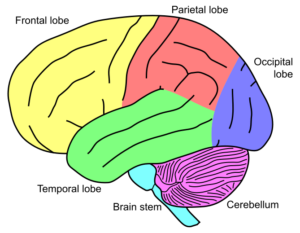
Alcohol misuse is a known cause of illness and poor health. According to the 2024 National Survey on Drug Use and Health, 28 million people ages 12 and older in the United States have Alcohol Use Disorder. The toxic effects of alcohol are diverse. Long-term alcohol use can cause damage to the cerebellum, the part of the brain that controls motor functions, which results in Ataxia.  

Different alcohol-related forms of ataxia include: 

  • Alcohol-Related Cerebellar Degeneration 
  • Wernicke Encephalopathy 
  • Korsakoff Syndrome 
  • Marchiafava-Bignami Disease 

While these conditions most often happen in people with alcohol use disorder, they can also be caused by malnutrition. These conditions can occur if your body does not have enough Thiamine (Vitamin B1). Chronic alcohol use makes it harder for your body to absorb and use Thiamine properly. However, Thiamine deficiency can also be caused by poor nutrition, eating disorders, cancer, chronic infections, and certain weight loss procedures (such as bariatric surgery).  

Ataxia caused by Chronic Alcohol Use Symptoms

Like many other forms of Ataxia, complex Ataxia caused by chronic alcohol is marked by poor balance and coordination. In fact, the word Ataxia means incoordination.  

People with Alcohol-Related Cerebellar Degeneration typically have progressive balance and gait problems. There may also be mild ataxia in the arms. However, there is usually severe leg ataxia. Unlike other forms of ataxia, people with Related Cerebellar Degeneration tend to have minimal speech or eye movement symptoms. These symptoms are chronic. They tend to appear slowly over time.  

The symptoms associated with Wernicke encephalopathy are sudden and severe. People with Wernicke encephalopathy tend to develop sudden-onset balance and coordination problems, vision problems (nystagmus), and episodes of confusion. Some people may also experience muscle loss.  Wernicke encephalopathy worsens over time and can be life-threatening. Emergency treatment with Thiamine is critical. If someone is experiencing these symptoms, call your doctor or 911 immediately.  

Korsakoff syndrome usually, but not always, occurs after an episode of Wernicke encephalopathy. In addition to balance and vision symptoms, people with Korsakoff syndrome have dementia. They often have a hard time learning new information and may have long-term memory gaps. People with Korsakoff syndrome may “confabulate,” or make up information to fill the gaps they can’t remember. This is not intentional lying or deception, as people who confabulate will believe these fabricated memories as true.  

There are three main symptom groupings for people with Marchiafava-Bignami Disease. In its acute form, people have a sudden loss of consciousness, seizures, and changes in mood. The subacute form causes depression and ataxia. The chronic form causes dementia, hallucinations, and behavior changes. Overall, Marchiafava-Bignami Disease is quite rare, with fewer than 300 known cases worldwide. 

Ataxia caused by Chronic Alcohol Use Prognosis

Ataxia caused by chronic alcohol use typically requires the long-term daily consumption of significant quantities of alcohol. However, the exact amount may vary person to person based on underlying factors. This can include nutrition (especially Thiamine/Vitamin B1), other substance use (tobacco and cannabis), biological sex, genetic factors, and overall health. 

There is limited demographic information available on people who have Ataxia caused by chronic alcohol use. These disorders tend to affect more men than women.  

Alcohol cessation, meaning stopping or significantly reducing alcohol consumption, is recommended to help manage ataxia symptoms. Suddenly stopping the consumption of alcohol after chronic use can cause severe, life-threatening withdrawal symptoms. Medical support is recommended during the alcohol withdrawal process. Supportive treatments including Thiamine supplementation, physical therapy, and social support can also significantly improve the lives of people with Ataxia caused by chronic alcohol use.  

Wernicke encephalopathy can be life-threatening. Emergency treatment with Thiamine is critical to prevent long-term brain damage.  

Some recovery from Ataxia caused by chronic alcohol use is possible. This depends on the amount of damage to the cerebellum that has occurred. There is a better prognosis if someone is diagnosed and begins treatment early. It is more challenging to recover after significant damage has occurred. 

Ataxia caused by Chronic Alcohol Use Diagnosis

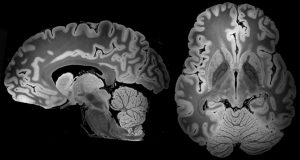
 A neurologist is often the most helpful specialist in recognizing symptoms and diagnosing  Ataxia. A neurologic examination can determine whether a person has symptoms typical of Ataxia caused by chronic alcohol use. There are several potential follow-up tests. MRI brain imaging may be used to confirm cerebellar atrophy. Metabolic tests may be ordered to measure Thiamine/Vitamin B1. An accurate personal medical history, including alcohol consumption, is critical to receive an accurate diagnosis.  

Ataxia caused by Chronic Alcohol Use Research News

SCAsource provides Ataxia research news, directly from researchers to the Ataxia community. Visit SCAsource to see their full collection. Here is a collection of articles about Ataxia Type Here. 

Snapshot: What is Dysmetria?

Dysmetria is a medical term used to describe a condition that affects one’s ability to control and coordinate their movements accurately. In simpler terms, it is like having a glitch Read More…

Snapshot: What is Nystagmus?

Nystagmus, also known as ocular ataxia, is a term that refers to uncontrollable eye movement- usually a repetitive cycle of slow movement in a specific direction followed by a quick Read More…

Snapshot: What is the Cerebellum?

The cerebellum, often referred to as the “little brain”, is part of the brain that is located behind the cerebrum (forebrain). The cerebellum accounts for about 10% of the brain’s Read More…

Print Friendly, PDF & Email
Translate »

Join the Ataxia community today!

Become a free member for exclusive content from NAF.