


Skip to content

Join the Summer Match Challenge! All donations during the month of June will be matched by the Clementz-Peterson Family Fund and an anonymous donor, up to $100K. DONATE

Snapshot: What Are Transgenic Mouse Models?

Why do we need mouse models for disease research?

Mouse models are crucial for understanding human diseases. They allow researchers to study how diseases develop and to test potential treatments in ways that wouldn’t be possible in humans. But how do scientists create mouse models that mimic specific diseases? One widely used approach is creating transgenic mice. 

What is a transgenic mouse?

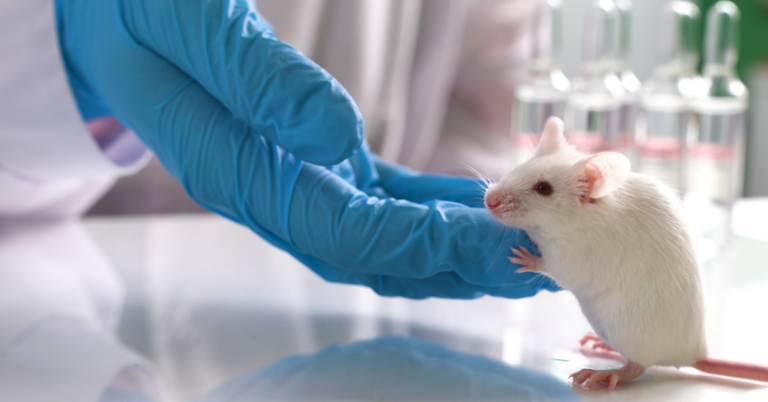
A transgenic mouse is a mouse that has new DNA added to its genome. The term “transgenic” means that genetic material from another source has been introduced into the mouse. This added DNA typically instructs the mouse’s cells to produce a specific protein—often a disease-causing protein that researchers want to study. 

How are transgenic mice created?

Many transgenic mouse models exist for different types of SCA. These models express the disease-causing proteins found in patients with SCA1, SCA3, SCA6, SCA7, and SCA17, among others. 

These mice are valuable because they mimic what happens in patients: a mutant protein is produced that damages cells, particularly in the cerebellum and other parts of the nervous system. The mutant protein causes harm even when the normal version of the protein is still present—a situation researchers call a toxic gain of function. By studying these transgenic mice, researchers can understand how the mutant proteins cause disease, identify which brain regions and cell types are most affected, track how the disease progresses over time, and test potential therapies before trying them in patients. 

If you would like to learn more about Transgenic Mouse Models, take a look at this resource by the Swanson Biotechnology Center

Transgenic mice in SCA research

There are two main methods for creating transgenic mice, though other approaches also exist. 

The first and most common method is pronuclear injection. Scientists inject the new genetic material directly into a fertilized mouse egg cell. A zygote, which is the single cell formed when an egg and sperm fuse, serves as the starting point. Scientists inject the desired DNA into the zygote’s nucleus, which is the compartment where DNA is stored in the cell. The zygote is then implanted into a surrogate mother mouse, and the resulting offspring carry the new genetic material in all their cells. 

The second major approach uses embryonic stem cells, which are special cells from early-stage embryos that can develop into any cell type in the body. Scientists introduce the new genetic material into these stem cells in the laboratory. The modified stem cells are then injected into a mouse embryo at a slightly later stage. The resulting embryo develops with a mix of normal and modified cells. When two mice carrying the modification are bred together, their offspring have the new genetic material in all their cells. 

Snapshot Written by: Christina Peng, PhD 

Edited by: Larissa Nitschke, PhD

Read Other SCAsource Snapshot Articles

Snapshot: What Are Silent Mutations?

Our DNA (deoxyribonucleic acid) serves as a genetic blueprint for building and maintaining our tissues. This complex molecule contains the information needed to build proteins, written in a code made Read More…

Translate »

Join the Ataxia community today!

Become a free member for exclusive content from NAF.