Pedaling Back Against Ataxia
Written by Jacen Emerson Edited by Pragya Goel, PhD Regular stationary bike training improves ataxia symptoms within months according to a clinical trial. Home cardio may outperform traditional balance Read More…




Written by Jacen Emerson Edited by Pragya Goel, PhD Regular stationary bike training improves ataxia symptoms within months according to a clinical trial. Home cardio may outperform traditional balance Read More…

What is a Randomized Controlled Trial (RCT)? Before a new drug or therapy can reach patients, researchers and regulatory agencies need evidence that it is safe and effective. One of Read More…
Written by Jamie Hyde Edited by Marija Cvetanovic, PhD “A new matched stem cell model gives SCA1 researchers a clearer way to study disease mechanisms and test potential treatments.” Using Read More…

Written by Juan MatoEdited by Jacen Emerson A new drug may help steady movement and improve daily life for people with ataxia-telangiectasia. Small improvements in motor control can have massive Read More…

The functional Scale for the Assessment and Rating of Ataxia (f-SARA) is a scoring system to track how much a person’s balance and movement are affected. The f-SARA is an Read More…

Written by Ray Truant, PhDEdited by Celeste Suart, PhD How the gut helps clean the brain In 2013, neuroscientists used mouse models to show that during deep Random Eye Movement Read More…

Written by Jacen Emerson Edited by Pragya Goel, PhD Regular stationary bike training improves ataxia symptoms within months according to a clinical trial. Home cardio may outperform traditional balance Read More…
Written by Jamie Hyde Edited by Marija Cvetanovic, PhD “A new matched stem cell model gives SCA1 researchers a clearer way to study disease mechanisms and test potential treatments.” Using Read More…
Written by Juan MatoEdited by Jacen Emerson A new drug may help steady movement and improve daily life for people with ataxia-telangiectasia. Small improvements in motor control can have massive Read More…
What is a Randomized Controlled Trial (RCT)? Before a new drug or therapy can reach patients, researchers and regulatory agencies need evidence that it is safe and effective. One of Read More…
The functional Scale for the Assessment and Rating of Ataxia (f-SARA) is a scoring system to track how much a person’s balance and movement are affected. The f-SARA is an Read More…

When scientists test a new treatment in a clinical trial, they need a reliable way to determine whether it is safe and effective. To do this, they rely on endpoints. Endpoints are clearly defined Read More…
(The Hauser Lab Back row, left to right: Linus Wiora, Stefan Hauser, Jacob Helm, Hariharan Menon, Luisa Baraban, Anabel Dickemann, Egemen Turkyilmaz. Front row, left to right: Lukas Senftleben, Natalia Vingut, Benedikt Meyer, Amelie Leonhardt, Clemens Sauter, Till Stoltenow. Not pictured: Read More…
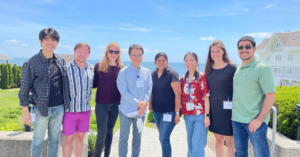
Picture of the Lim lab taken in May 2022. Left to right: Chris Lee, Benjamin Sanders, Kimberly Luttik, Dr. Janghoo Lim, Dr. Neha Gogia, Luhan Ni, Ashley Owens, Victor Olmos Read More…
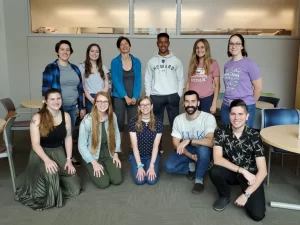
Principal Investigator: Dr. Marija Cvetanovic Location: University of Minnesota, Minneapolis, USA Year Founded: 2012 What disease areas do you research? SCA1 What models and techniques do you use? Mouse models Human stem Read More…

Written by Terry Suk Edited by Dr. Hayley McLoughlin In this classic article, researchers describe how CAG repeat number variation can inform differences in the way SCA3/MJD symptoms present. Machado-Joseph Read More…
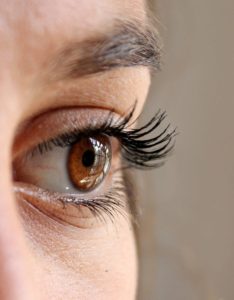
Written by Siddharth Nath Edited by Dr. Ray Truant Spinocerebellar ataxia type 7 (SCA7) is unique amongst the SCAs in that it involves an organ besides the brain – the eye. Rather Read More…

Written by Dr. Sriram Jayabal Edited by Dr. Brenda Toscano-Marquez Scientists uncover SACS, a gene containing the largest exon identified in vertebrates, which leads to ARSACS when mutated. What is Read More…
The SCAsource team is excited to announce that we are partnering with the National Ataxia Foundation (NAF) to improve our website infrastructure! As you know, SCAsource is run by a Read More…

The SCAsource team is pleased to announce that we have become a partner of the Ataxia Global Initiative (AGI)! The AGI is an international collaboration to assist the development of Read More…

Wishing you and your families a happy and safe holiday season! We will be back in January 2021 with new content. Hope you have a fantastic new year! Read More…