


Skip to content

ACE applications are now open through October 15. Join a national network committed to providing high-quality, comprehensive Ataxia care. Apply Now!

Spotlight – The Hauser Lab

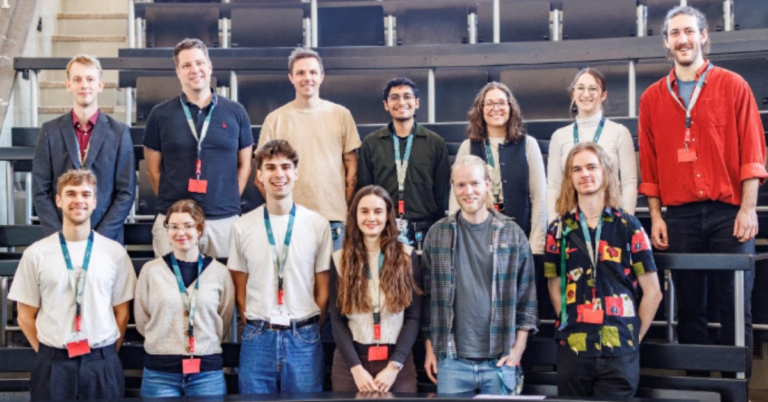
(Group picture of the Hauser Lab at the Stem Cells in Neuroscience Conference in Tübingen, 2026. Back row, left to right: Linus Wiora, Stefan Hauser, Jacob Helm, Hariharan Menon, Luisa Baraban, Anabel DickemannEgemen Turkyilmaz. Front row, left to right: Lukas Senftleben, Natalia VingutBenedikt Meyer, Amelie Leonhardt, Clemens Sauter, Till Stoltenow 
Not pictured: Yvonne Schelling, Melanie Kraft, Ludger Schöls) 

Principal Investigator: Stefan Hauser, PhD (Dr. rer. nat.) 
Location: German Center for Neurodegenerative Diseases, Eberhard-Karls-University of Tübingen, Tübingen, Germany  
Year Founded: 2023

What models and techniques do you use?

Research Focus

What is your research about? 

We study how genetic changes damage brain cells and lead to neurodegenerative diseases like Ataxia. Using patient-derived human cell models, we investigate: 

  • What goes wrong inside cells at the molecular level (genes, RNA, proteins)? 
  • What goes wrong inside cells at the cellular level (cellular growth, function, communication)? 
  • Why do different mutations cause similar disease symptoms?  

A major goal of our work is to translate these findings into new treatment strategies, including personalized approaches. In particular, we are exploring targeted therapies that can selectively silence harmful gene variants while preserving the normal function of the healthy gene. This is important because brain cells still rely on the healthy version of the gene to function properly.  

Why do you do this research? 

We focus on these questions because for many rare neurodegenerative diseases, only treatments that relieve symptoms are available. These symptomatic treatments are a good start. However, someday we want there to be treatments targeting the root cause of Ataxia. 

To change this, we need to better understand what causes the diseases at a molecular and cellular level. This includes how abnormal proteins build up and affect brain cells. This knowledge can help us identify the earliest stages of disease, when treatment may be most effective. Our goal is to support the development of more targeted and personalized therapies for patients with rare and ultra-rare conditions that have a major impact on their lives and families. 

Research Focus

In our lab, coffee is the highest-performing “team member” and never misses a shift. 

For more information, check out the Hauser Lab Website. 

Written by: Luisa Baraban 
Edited by: Celeste Suart, PhD, MEd

Read Other SCAsource Snapshot Articles

Snapshot: What is an Endpoint?

When scientists test a new treatment in a clinical trial, they need a reliable way to determine whether it is safe and effective. To do this, they rely on endpoints.  Endpoints are clearly defined Read More…
Snapshot: What is Levacetylleucine?

Levacetylleucine, sold under the brand name Aqneursa, is an FDA-approved treatment for Niemann-Pick disease type C (NPC). It is an oral medicine, approved by the FDA in September 2024, later Read More…

Translate »

Join the Ataxia community today!

Become a free member for exclusive content from NAF.