
Written by Taylor Stolberg
Faces of Ataxia Research highlights scientists whose work is supported by grants from NAF. Each story shows how our donors are fueling discoveries that bring us closer to effective treatments and a cure for Ataxia.
Meet the Researcher
Project title:
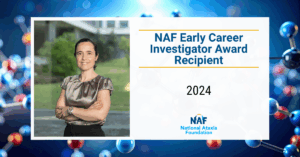
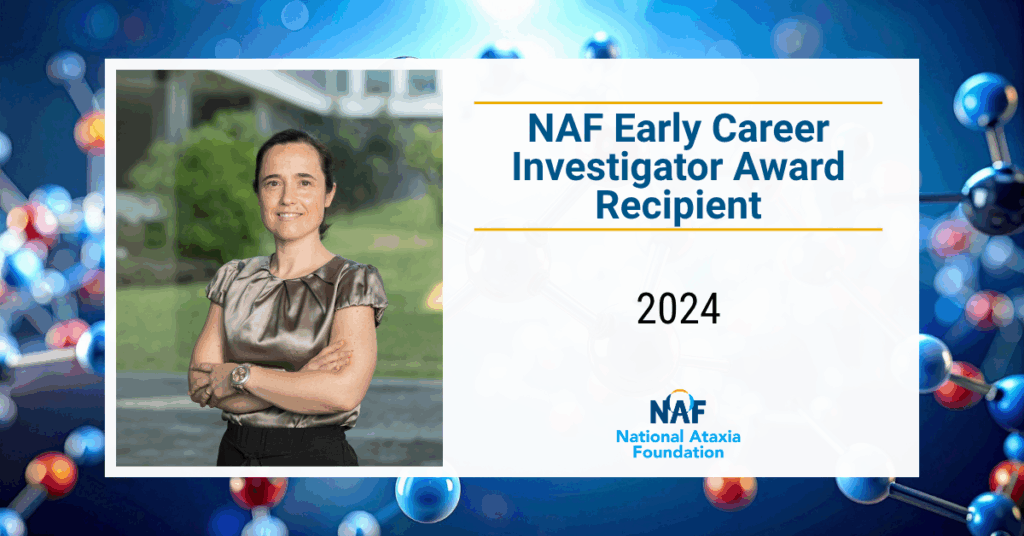
- Early Career Investigator Award (2024): “Decoding the serotonergic circuitry in the Machado-Joseph disease mouse brain”
Education:
- B.S.c., University of Porto, Biochemistry
Research: Dr. Jorge Sequeiros and Dr. Patrícia Maciel (University of Porto)
Short trainee period at Dr. Sandra Macedo-Ribeiro (University of Coimbra) - M.S.c., University of Minho, Molecular Genetics
- PhD, University of Minho, Health Sciences
- Postdoc, University of Minho, Dr. Patrícia Maciel Laboratory
- Postdoc, Northwestern University, Dr. Richard Morimoto Laboratory
Current Position:
- Assistant Professor, University of Minho
Path to Ataxia Research
Dr. Teixeira-Castro began studying ataxia as an undergraduate student. In her undergraduate research lab under Dr. Jorge Sequiro’s mentorship, Dr. Castro studied protein interactions in Spinocerebellar Ataxia type 3 (SCA3). Here, she connected with ataxia and Huntington’s Disease (HD) patients, on top of her human genetics research. Loving the research so much, Dr. Castro decided to pursue a career in ataxia research. She loved investigating the “why” for how medicines worked, and to discover new drugs for incurable diseases.
Dr. Castro went on to pursue a Masters and PhD, both at the University of Minho. Here under the mentorship of Dr. Patrícia Maciel, Dr. Castro developed a Caenorhabditis elegans (C. elegans) model to study SCA3 biochemistry. Since then, Dr. Castro has been studying SCA3, using biochemistry to identify new drug targets for SCA3.
Focus of Current Research
Currently, Dr. Teixeira-Castro studies treatment targets for SCA3. One of her research directions is ‘drug repurposing’ (screening) for SCA3 treatments. Drug repurposing is identifying novel ways medications can be used to treat health conditions aside from the drug’s original purpose. New medications can take many years to become FDA-approved. Drug repurposing lessens the amount of time to introduce medications, which can help patients faster.
She uses the worm model Caenorhabditis elegans (C. elegans) of SCA3 to investigate these treatment approaches and targets. C. elegans is a useful model for ataxia, as these worms possess nerves and a “brain” (small cluster of neurons). Dr. Castro recently discovered that the drug citalopram could be used to treat abnormal protein aggregations in SCA3.
Citalopram is a commonly prescribed medication for anxiety and depression. However, Dr. Castro discovered in her C. elegans model, abnormal ATXN3 (protein dysfunctional in SCA3) aggregation in SCA3 is reduced. Intrigued, she is elucidating the mechanisms for why citalopram decreases ATXN3 toxicity.
One reason why citalopram may reduce SCA3 pathology is alterations in serotonin. Serotonin is an important chemical in the brain that regulates our physiological functions, including mood, sleep, hunger, and learning. Problems with serotonin can lead to several conditions, including depression, anxiety, and ADHD. Dr. Castro is currently making a serotonin map in C. elegans and mouse brains to track where serotonin signaling differs in SCA3 pathology. This is important, because knowing how serotonin is dysfunctional may lead to a new treatment target for SCA3.
Why Ataxia Research Matters
When asked why researching is important to her, Dr. Castro recalled one ataxia event she attended as a PhD student. During her PhD, Dr. Castro attended a scientific meeting with her lab in Chicago. Here, Dr. Castro presented her PhD research to patients. The patients and caregivers in attendance were eager to learn more about her work and get to know her as a person. Dr. Castro’s face lit up when telling this story, as she loved connecting with the ataxia community at this meeting and learning about the patient’s needs.
This example is one of several reasons why researching ataxia is meaningful for Dr. Castro. She is motivated to use her research to identify rare disease mechanisms and clinical targets for SCA3. In ataxias such as SCA3, patients may have declining motor skills but have intact cognitive function. Dr. Castro has observed from patient and caregiver interactions the impact of declining motor function on patients, and is motivated to find a cure for ataxia.
Research Impact on the Ataxia Community
Dr. Castro emphasized her work can have clinical impacts. Namely, her studies on citalopram have demonstrated the anti-anxiety drug reduces ATXN3 aggregation in her C. elegans and mouse models. These results suggests repurposing citalopram could become an available treatment option for patients in the future.
Advancements through NAF Funding
Currently, Dr. Castro and her lab team are still learning a lot from the 2024 grant. She is running many experiments, and investigating many unanswered questions about serotonin function in SCA3. However, she has learned a lot about the relationship between serotonin and protein aggregation in SCA3. These were surprising yet intriguing findings, and Dr. Castro is excited to continue researching serotonin contributions.
Bridging Gaps in Knowledge
One large gap within ataxia today is how the genetics of the disease leads to patient symptoms. Dr. Castro’s work addresses this gap in SCA3. She aims to answer how the serotonin system plays a role in SCA3 pathogenesis. Knowing this could help researchers design more effective therapeutics aimed at treating SCA3. However, more research needs to be done in order to affirm this.
Career Growth Through NAF Support
Receiving the NAF grant had many positive impacts for Dr. Castro. Firstly, being awarded her first NAF grant in 2014 has allowed Dr. Castro to receive multiple grants down the road and continue studying this work. Dr. Castro mentioned it was “gratifying” to be a part of the ataxia research community, with so much to learn from.
Long-Term Goals
Dr. Castro has several goals, all relating to having a positive impact on patients. Dr. Castro emphasized during the interview how translational research leads to impacts on patients. In lab meetings, Dr. Castro dedicates some time to discuss with her team how their research can benefit patients. One of these goals is to eventually contribute to a clinical trial. Dr. Castro would love to use her research to contribute to a clinical trial.
Hobbies Outside the Lab
When away from the lab, Dr. Castro is dedicated to spending time with her family, including her 7-year-old daughter. Dr. Teixeira-Castro is also passionate about exercising and nutrition. During the interview, she joked that when she retired, she would love to be a nutrition coach.