
Written by Taylor Stolberg
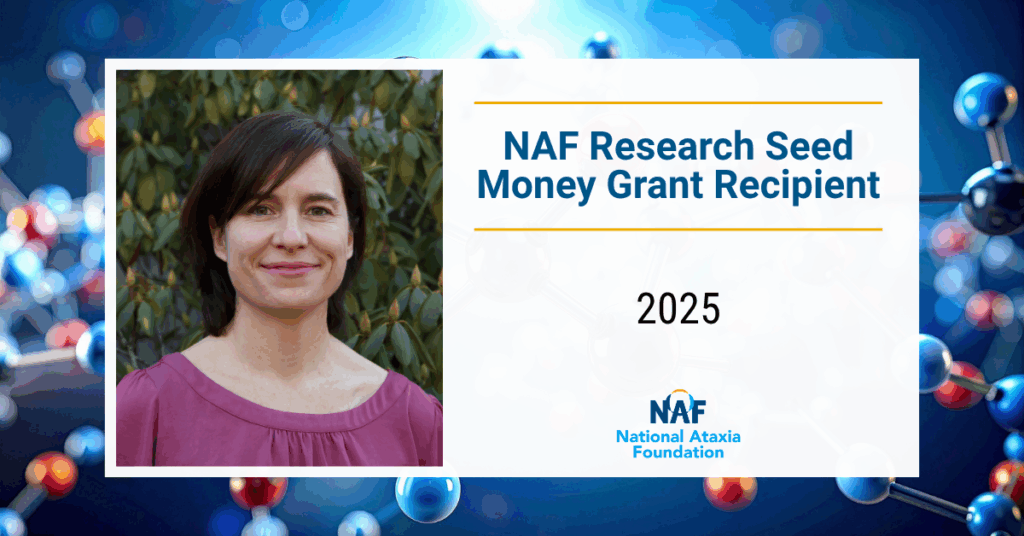
Faces of Ataxia Research highlights scientists whose work is supported by grants from NAF. Each story shows how our donors are fueling discoveries that bring us closer to effective treatments and a cure for Ataxia.
Meet the Researcher
Project title:
- Research Seed Money Grant (2025): “Uncovering a novel recessive spinocerebellar ataxia caused by genetic variants in SNX13”
Education:
B.S., Biology, University Pompeu Fabra
PhD, University of Barcelona
Postdoc, University of California, San Diego
Current Position:
- Associate Professor, Children’s Hospital of Philadelphia
Path to Ataxia Research
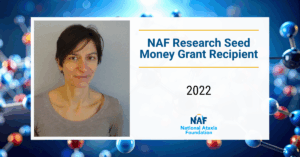
Dr. Akizu’s interest in ataxia grew from her PhD research. Having an initial interest in human genetic disorders, Dr. Akizu conducted her PhD research in a neurodevelopmental disease lab. This piqued her interest in investigating how childhood neurological conditions developed.
During her postdoctoral fellowship at the University of California, San Diego, Dr. Akizu conducted genetic screening research in patients with cerebellar atrophy. Here, she identified several genes related to other ataxias. Excited by this work, she wanted to continue researching the genetic and biological causes of neurodevelopmental ataxias. Since coming to the Children’s Hospital of Philadelphia, she has discovered new disease genes and mechanisms underlying neurodevelopmental ataxias.
Focus of Current Research
Currently, Dr. Akizu studies the genetics of developmental ataxias. Specifically, Dr. Akizu studies ataxias with a symptom onset shortly after birth, also known as perinatal (or neurodevelopmental) ataxias.
Perinatal ataxias have a heterogeneous range of symptoms, including developmental delays and cerebellar syndromes. These ataxias can be very challenging to treat, as children are most often diagnosed within the first few years of life. Using genetic mouse models and human pluripotent stem cells, Dr. Akizu studies the pathogenic mechanisms underlying ataxias caused by SNX13 and SNX14 mutations. SNX13 and SNX14 are genes that, when mutated, can cause smaller cerebellums and other neurodevelopmental problems. While pluripotent stem cells are a good model system for biochemical and cell biology studies, and therefore can be used to study how mutations affect cellular functions, they lack the complexity and specificity of the cerebellum. Therefore, Dr. Akizu combines human pluripotent stem cell work with mouse models. Recently, Dr. Akizu developed a mouse model with a small part of the SNX13 gene deleted, to portray the ataxia model more comparable to children carrying SNX13 mutations they have newly identified. Ultimately, Dr. Akizu aims to know how the mutation of these genes causes the clinical characteristics of patients.
Why Ataxia Research Matters
When asked this question, Dr. Akizu emphasized the importance of investigating the cerebellum vulnerability. A common “theme” across all ataxias is the vulnerability of this brain region to damage. For instance, why is the cerebellum very susceptible to degeneration from genetic repeat mutations?
There are many unanswered questions about the cerebellum’s basic biology. Learning about cerebellum damage in rare ataxias can teach us about the cerebellum’s vulnerability in ataxia. Dr. Akizu believes understanding how the cerebellum becomes damaged could lead to developing new gene treatments for more than one ataxia subtype. This includes recessive ataxias, especially childhood ataxias, which are even rarer in the ataxia field.
Research Impact on the Ataxia Community
Dr. Akizu’s work is aimed at identifying mechanisms associated with more than one ataxia subtype. For instance, she recently found that ataxias caused by dysfunction in the SNX13/14 genes have lipid and lysosome metabolism issues. Using a mouse model, Dr. Akizu found that lipids accumulated in the cerebellum of SNX14 ataxia mouse models. When this lipid accumulation or lysosome dysfunction is present, neurons can die off and leading to ataxia symptoms. Interestingly, mutations in genes regulating lipid and lysosome metabolism often affect the cerebellum. This neuron vulnerability suggests some ataxias may have a common cause with each other. Dr. Akizu hopes that this mechanistic work on lipid dysfunction could become a therapeutic target in the future.
Advancements through NAF Funding
Dr. Akizu’s grant taught her both academically and helped her career. Primarily, Dr. Akizu confirmed that lipids are dysregulated in SNX14 mutations, contributing to ataxia symptoms in the mouse models and clinical data. When lipids are absent from these mutations, lysosomes do not work properly. Even more excitingly, Dr. Akizu found that SNX13 mutations also cause cerebellar ataxia and collaborate with SNX14 in regulating lipid and lysosome metabolism.
Lysosomes are small “organs” (organelles) in our cells whose job is to remove any unwanted or damaged proteins. When lysosomes don’t function normally, abnormal proteins and other compounds can accumulate in these cells. Since receiving her NAF grant, Dr. Akizu has been able to continue investigating how SNX13 and SNX14 mutations cause abnormal lipid movements to lysosomes and lead to cerebellar ataxia. Currently, she is developing new tools to be able to track abnormal lipid movements to the lysosome.
Bridging Gaps in Knowledge
Dr. Akizu’s research enhances our understanding of both cerebellum physiology and rarer ataxias. During the interview, Dr. Akizu mentioned that more common ataxias, such as Spinocerebellar ataxia types 1 and 3 (SCA, SCA3), have taught us a lot about vulnerable regions in ataxia. However, cerebellar mechanisms in rarer ataxias, such as perinatal ataxias, are less well-known. Dr. Akizu’s work depicts new mechanisms of Purkinje cell vulnerability in these ataxia models, both in mice and in human pluripotent stem cells.
Additionally, Dr. Akizu’s research informs us how the cells in the cerebellum can be damaged by ataxia mutations. In SNX14 models, Purkinje cells in the cerebellum are vulnerable to the ataxia mutations. However, exactly how the genetic mutations make the cerebellum more vulnerable is not clear. Lipid dysfunction in the cerebellum is one mechanism Dr. Akizu has discovered in her lab, and is now using tools to further investigate this lipid dysfunction.
Career Growth Through NAF Support
One major impact of her NAF grant was connecting more with the ataxia community. Dr. Akizu lit up when she recalled attending ataxia communities and hearing many patient stories. She stated that these stories touched her personally, as they reinforced why she is motivated to come into work every day, committed to researching ataxia.
Receiving her NAF grant has also helped Dr. Akizu continue studying ataxia long-term. Prior to her NAF grant, Dr. Akizu was interested in studying SCAR20 and SNX13/14 mutations, but did not have enough funding at the time to do both. She was concerned about whether one of these projects would be discontinued.
However, her first NAF grant in 2017 allowed Dr. Akizu to keep both projects open, and enabled her to complete both projects in SCAR20 and SNX13 and SNX14 mutations in ataxia. With the newest data collected through the NAF pilot grant, Dr. Akizu and her lab team are even planning to submit a paper soon on their SNX13 and SNX14 research!
Thirdly, her first NAF grant enabled Dr. Akizu to receive future funding to continue her research on ataxia. For instance, her NAF grant has enabled her to identify new causes of ataxia, not previously known. Dr. Akizu is passionate about continuing this research to understand how these genetic mutations drive pathogenesis in ataxia.
Long-Term Goals
Dr. Akizu ultimately has two goals as an ataxia researcher. Firstly, she aims to identify new causes of ataxia, especially in ones with childhood onset. Many ataxias have a genetic basis, such as a single mutation in one gene. However, for other ataxias, we are still learning what causes them! Dr. Akizu would like to discover the causes of these lesser-understood ataxias, as knowing their genetic causes can lead to the development of new treatments.
Secondly, Dr. Akizu hopes her work can translate into some therapy or treatment for ataxia in the future. Once the cause of an ataxia is known, researchers can more easily identify treatments for this ataxia and its symptoms. Dr. Akizu would love to see her research be applied to identify therapeutic targets for mutations in the SNX13 and SNX14 gene mutations. Whether a diet or gene therapy, Dr. Akizu hopes her work can eventually be translated therapeutically.
Hobbies Outside the Lab
Even though she does science research for her job, Dr. Akizu is also passionate about science outside the lab. During the interview, she joked that there is “nothing better than a job that is a hobby”. When not doing science, Dr. Akizu enjoys hanging out with her 8-and 11-year-old children, and playing music. She taught herself how to play the piano, and even used to play the accordion!
Read Other Faces of Ataxia Features