
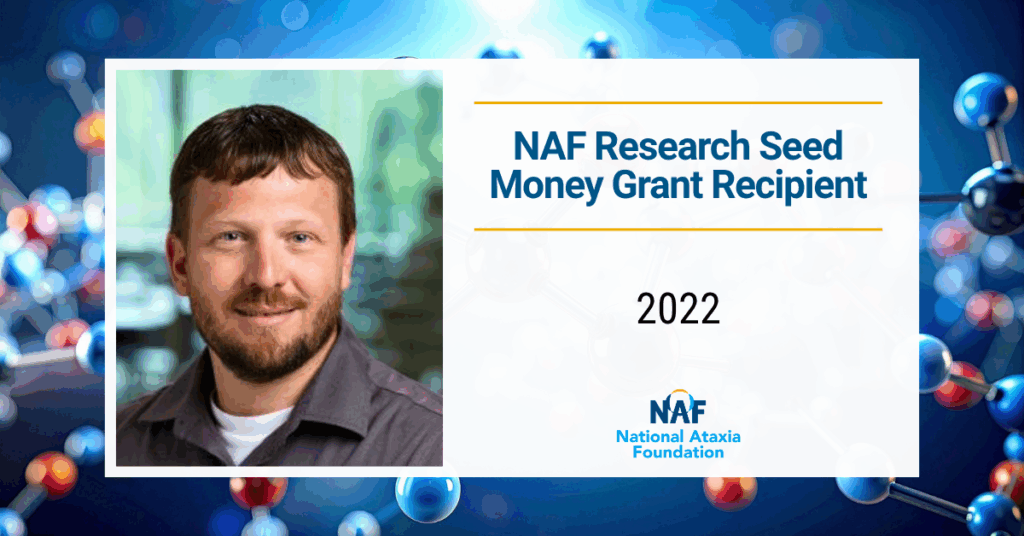
Written by Taylor Stolberg
Faces of Ataxia Research highlights scientists whose work is supported by grants from NAF. Each story shows how our donors are fueling discoveries that bring us closer to effective treatments and a cure for Ataxia.
Meet the Researcher
Project title:
- Mechanisms of Neurodegeneration in SCA48
Education:
- B.S., McKendree University, Biology
- PhD, St. Louis University School of Medicine, Biochemistry
- Postdoc, University of Michigan
- Assistant Professor, Medical College of Wisconsin
Current Position:
- Associate Professor, Duke University School of Medicine
Path to Ataxia Research
Dr. Scaglione began studying ataxia during his postdoctoral fellowship. After receiving his PhD, Dr. Scaglione pursued a postdoctoral fellowship at the University of Michigan with Dr. Henry Paulson. There, he studied how a specific protein, CHIP, protects brain cells (neurons) in Spinocerebellar ataxia type 3 (SCA3).
CHIP is a protein found in all cells of our bodies, including neurons. This protein’s job is to make sure misfolded proteins in our bodies don’t accumulate. If a protein was not made correctly or misfolds, the CHIP protein identifies or “tags” the misfolded protein to be recycled. Without this important recycling process, neurons and other cells do not function normally.
In Dr. Paulson’s lab, Dr. Scaglione investigated how the CHIP protein protects neurons against Atxn3, the mutant protein in SCA3. Intrigued by CHIP’s function, Dr. Scaglione opened his own lab at the Medical College of Wisconsin and later moved to Duke University. In his lab, Dr. Scaglione is studying how mutations in CHIP cause other ataxias. This includes spinocerebellar ataxia autosomal recessive type 16 (SCAR16) and the dominantly inherited spinocerebellar ataxia type 48 (SCA48), both caused by mutations in CHIP.
Focus of Current Research
Currently, Dr. Scaglione researches neuroprotective pathways in SCA48. More specifically, he is studying the structure and function of CHIP and other proteins involved both in SCA48. Dr. Scaglione is also using these findings to better understand the normal neuroprotective function of CHIP in other ataxias.
Dr. Scaglione studies protein structure through a technique known as nuclear magnetic resonance (NMR). This is an advanced technology that uses magnetic waves to determine what a protein looks like. This is important, because understanding the protein’s structure can help researchers determine both disease mechanisms and identify potential therapeutic targets for this diseased protein.
Dr. Scaglione is also interested in investigating other pathologies related to SCA48. This includes trying to understand the genetic link between mutations in CHIP and spinocerebellar ataxia type 17 (SCA17). More recently, he has begun collaborating with Dr. Caig Lowe of Duke University to develop new ataxia mouse models. This mouse model is a cross between SCA17 and SCA48 mutations, two diseases that have a genetic connection in patients.
Why Ataxia Research Matters
Researching ataxia is very meaningful to Dr. Scaglione. Since starting ataxia research, he has attended several ataxia meetings. At these meetings, he has been able to hear many patient’s stories with ataxia. Listening to these stories from patients has made Dr. Scaglione more motivated to study and develop treatments for ataxia, especially for ataxias with lesser understood causes.
Research Impact on the Ataxia Community
Dr. Scaglione hopes his research can have two impacts on people with ataxia. First, Dr. Scaglione hopes his work can demonstrate why and how ataxias, such as SCA48, form. Understanding the mechanisms behind why these diseases occur can give insight into potential therapeutic targets to treat SCA48 and other ataxias. Similarly, Dr. Scaglione hopes that this foundational research will translate into a direct impact for patients, such as starting drug discovery projects.
Advancements through NAF Funding
Dr. Scaglione stated he learned a lot. He was able to identify mechanisms in SCA48 disrupted by abnormal CHIP function. He discovered how CHIP was disrupted in these neurons, and that CHIP has novel roles in neurons that we previously didn’t know about. Disruption of these new roles of CHIP is sufficient to reduce CHIP’s ability to protect neurons from damage.
Additionally, his lab has found that CHIP interacts with proteins that when mutated cause cognitive problems in patients. This is important because patients with SCA48 often develop dementia and other cognitive issues and these novel interactors may explain why this occurs. Together these findings could lead to new therapeutics designed to treat this symptom in SCA48.
Bridging Gaps in Knowledge
Dr. Scaglione’s research identifies novel pathways underlying ataxia. By researching the molecular pathology of SCA48, Dr. Scaglione can discern which proteins are driving the pathogenesis of the ataxia. Additionally, this work also helps him connect what is happening inside of cells to the symptoms patients are experiencing.
Career Growth Through NAF Support
Long-Term Goals
Dr. Scaglione has three primary goals as an ataxia researcher. Firstly, he wants to shine light onto rare diseases. More prevalent diseases, such as Parkinson’s Disease or Alzheimer’s Disease, have more well-known causes and are studied more frequently. However, causes or therapeutic targets for rarer diseases such as SCA48 are not as well known. Dr. Scaglione hopes his SCA48 work can both provide treatment targets and causes of SCA48, and give insight into mechanisms underlying common neurodegenerative diseases.
Secondly, Dr. Scaglione hopes to get more students excited about ataxia research. Dr. Scaglione is passionate about mentoring students, where he also serves as director of Duke’s graduate school program. He would like to continue training the next generation of students to pursue ataxia research.
Thirdly, Dr. Scaglione has a goal of seeing psychotherapeutic drugs eventually developed for ataxias. While ataxia is defined by loss in motor function, some ataxias also have associated cognitive symptoms. Dr. Scaglione hopes his work on protein mechanisms in SCA48 may lead to development of new psychotherapeutics.
Hobbies Outside the Lab
When away from the lab, Dr. Scaglione enjoys hanging out with his family with trips to the Outer Banks and Smoky Mountains. In addition, his oldest daughter is on the high school golf team and Dr. Scaglione enjoys hanging out with her on the golf course. When he has time, he also likes brewing beer in his garage.
Read Other Faces of Ataxia Features
Read Our Latest Blogs