
Skip to content

The Ataxia Community Comes Together in Orlando April 9–11, 2026 for the Annual Ataxia Conference! LEARN MORE

SCA2

24/7 Wearable Sensors: A New Way to Track Ataxia

Written by Poojashree Chettiar Edited by Pragya Goel, PhD AI and wearable tech may transform how ataxia is monitored Could everyday devices help track ataxia? Finding treatments for neurological disorders like spinocerebellar ataxias (SCAs) and multiple system atrophy (MSA-C) has been challenging. A major reason is the lack of good Read More…

Spinal Cord Damage Detected Prior to Disease Onset in Several SCAs

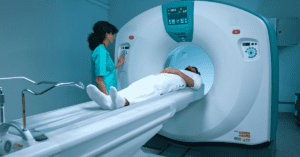
Written by Jacen Emerson Edited by Hannah Shorrock, PhD Human Imaging data reveals worsening spinal cord damage in several Ataxias that can begin before symptoms start. Why does the spinal cord matter in SCA? Rezende and colleagues recently published the most thorough study of spinal cord damage in Spinocerebellar Ataxias Read More…

Snapshot: What are oligodendrocytes?

Oligodendrocytes are a type of brain cell that play a crucial role in insulating neurons to facilitate efficient transmission of electrical signals. Similar to the rubber coating on cords, oligodendrocytes wrap around axons with a cholesterol-rich myelin structure, which speeds up the transmission of electrical impulses. Each oligodendrocyte can myelinate Read More…

Snapshot: What is the Medulla Oblongata?

The nervous system is made up of two main components: the central nervous system, which consists of the brain and the spinal cord, and the peripheral nervous system, which consists of nerve cells that branch off the spinal cord and connect the central nervous system to the rest of the Read More…

Decorative digital drawing of the brain

Snapshot: What is the pons?

Brainstem – the part that connects and acts as a communicator between our brain and our spinal cord. The brainstem itself is composed of midbrain, pons, and medulla oblangata. Even minor injuries or disruptions to this neural communication and this region can have devastating consequences. The pons is a horseshoe-shaped Read More…

Measuring neurodegeneration in spinocerebellar ataxias

Written by Dr Hannah K Shorrock Edited by Dr. Maria do Carmo Costa Neurofilament light chain predicts cerebellar atrophy across multiple types of spinocerebellar ataxia A team led by Alexandra Durr at the Paris Brain Institute identified that the levels of neurofilament light chain (NfL) protein are higher in SCA1, Read More…

Translate »

Join the Ataxia community today!

Become a free member for exclusive content from NAF.