

Skip to content

The Ataxia Community Comes Together in Orlando April 9–11, 2026 for the Annual Ataxia Conference! LEARN MORE

SCAsource Article Summary

Gene Therapy Validated In Human SCA3 Stem Cells

Written by Dr. Marija Cvetanovic Edited by Dr. Sriram Jayabal Research group in Michigan report the creation of the first NIH-approved human cell model that mirrors SCA3 disease features – cellular defects that, after gene therapy, show improvement Spinocerebellar ataxia type 3 (SCA3) is a dominantly-inherited, late onset genetic disease Read More…


La huntingtine: un nouvel acteur dans l’arsenal de la réparation de l’ADN

Écrit par Dr. Ambika Tewari, Edité par Dr. Mónica Bañez-Coronel, Traduction française par: L’Association Alatax, Publication initiale: 22 novembre 2019 Des mutations dans la protéine huntingtine altèrent la réparation de l’ADN, causant des dommages importants à l’ADN et une expression génétique modifiée. Notre génome regroupe l’intégralité de notre matériel génétique, qui Read More…

Concevoir une stratégie thérapeutique unique pour traiter plusieurs types d’ataxie spinocérébelleuse

Écrit par Dr David Bushart, Édité par Dr Hayley McLoughlin, Traduction française par: L’Association Alatax, Publication initiale: 3 janvier 2020 Une stratégie de traitement nouvellement proposée pourrait être efficace contre plusieurs formes d’ataxie spinocérébelleuse et d’autres troubles associés aux répétitions CAG. Lors de la réception d’un diagnostic initial d’ataxie spinocérébelleuse Read More…

Working with cerebellar ataxia

Written by Dr. David Bushart Edited by Dr. Sriram Jayabal How can employment be made more accessible for ataxia patients? What barriers exist? A study of workers and non-workers with ataxia analyzes the benefit of employment, as well as how to reduce risk of injury. A job can often become Read More…

Designing a new “measuring stick” for ARSACS

Written by Dr. Brenda Toscano Márquez  Edited by Dr. Ray Truant ARSACS researchers develop a better “measuring stick”, or disease severity index that can help better assess the progression of motor symptoms and compare different groups of ARSACS patients. How does your doctor know you are sick? In short: measurements. Read More…

How an ataxia gene increases the risk for Alzheimer’s disease

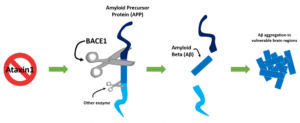
Written by Dr. Judit M. Perez Ortiz Edited by Dr. Marija Cvetanovic In a tour de force study, a collaborative team of scientists led by Dr. Rudolph Tanzi (Harvard Medical School) and Dr. Huda Zhogbi (Baylor College of Medicine) found a novel relationship between the Spinocerebellar ataxia type 1 gene (ATXN1) Read More…

Two or more birds with one stone: Designing a single therapeutic strategy to treat multiple types of spinocerebellar ataxia

Written by Dr. David Bushart Edited by Dr. Hayley McLoughlin A newly-proposed treatment strategy might be effective against several forms of spinocerebellar ataxia and other CAG repeat-associated disorders Upon receiving an initial diagnosis of spinocerebellar ataxia (SCA), a swarm of questions might enter a patient’s mind. Many of these questions Read More…

Eyes: Windows to peek at brain function in spinocerebellar ataxias

Written by Dr. Sriram Jayabal Edited by Dr. David Bushart Eye movement deficits occur ubiquitously in spinocerebellar ataxias, even at early disease states, highlighting their clinical importance. Imagine the different motor movements that you make in your everyday life. Many people think of actions that we perform using our hands Read More…

New Strategy for Reducing Ataxin-1 Levels Shows Promise

Written by Carrie A. Sheeler Edited by Dr. Ronald A.M. Buijsen RNAi reduces levels of disease-causing Ataxin-1 in SCA1 model mice, easing symptoms of disease when injected both before and after symptom onset. Lowering the amount of the disease-causing mutant Ataxin-1 protein in affected cells and tissues improves symptoms of Read More…

Translate »

Join the Ataxia community today!

Become a free member for exclusive content from NAF.