

Skip to content

ACE applications are now open through October 15. Join a national network committed to providing high-quality, comprehensive Ataxia care. Apply Now!

SCAsource Article Summary

Zapping the brain to help ataxia

Written by Dr. Judit M. Perez Ortiz Edited by Dr. Sriram Jayabal In a new study, scientists have found that “zapping” the brain with an electromagnetic wand may someday help patients with spinocerebellar ataxia. In an era of ever-evolving technological advances used for personal entertainment and space travel, medical scientists Read More…

Recovering Purkinje cell health could improve quality of life in SCA3

Written by Jorge Diogo Da Silva Edited by Dr. David Bushart Normalizing neuronal dysfunction in SCA3/MJD by activating a receptor inside cells Spinocerebellar ataxia type 3 (SCA3), also known as Machado-Joseph disease (MJD), is an inherited neurodegenerative disease that typically begins in mid-adulthood. This disease causes loss of coordination and Read More…

Non-invasive imaging of neurodegeneration in live animals

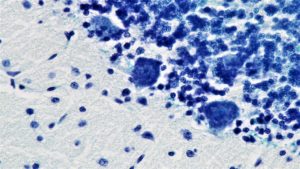
Written by Dr. Marija Cvetanovic   Edited by Larissa Nitschke Purkinje cells (a type of neuron in the cerebellum) are the most vulnerable cells in many Spinocerebellar Ataxias (SCAs). While animal models of SCA have been very fruitful in understanding the mechanisms of Purkinje cell neurodegeneration, none of these models have Read More…

Mitochondrial impairments identified in SCA7 mouse model and patient cells

Written by Dr. Colleen A. Stoyas Edited by Dr. Monica Banez  Duke University researchers have found that altered cellular metabolism and mitochondrial dysfunction play a central role in spinocerebellar ataxia type 7 (SCA7), a result that has therapeutic implications for this disease. Spinocerebellar ataxia type 7 (SCA7) is a dominantly-inherited ataxia Read More…

VEGF-mimicking nanoparticles improve SCA1 disease phenotype in mice

Written by Dr. Chandrakanth Edamakanti Edited by Dr. David Bushart VEGF nanoparticles offer a new avenue for developing treatments for SCA1 and other neurodegenerative disorders Spinocerebellar ataxia type 1 (SCA1) is a neurogenerative disorder with symptoms that typically begin in the third or fourth decade of life. The disease is Read More…

A Creatine-rich Diet Delays Disease in SCA3 Mice

Written by Dr. Lauren R. Moore Edited by Larissa Nitschke Creatine, a common dietary supplement taken by athletes, delays symptoms and improves balance and strength in SCA3 mice. Could a common nutritional supplement used by athletes to boost performance also provide benefits to ataxia patients? This was the main question Read More…

Translate »

Join the Ataxia community today!

Become a free member for exclusive content from NAF.