
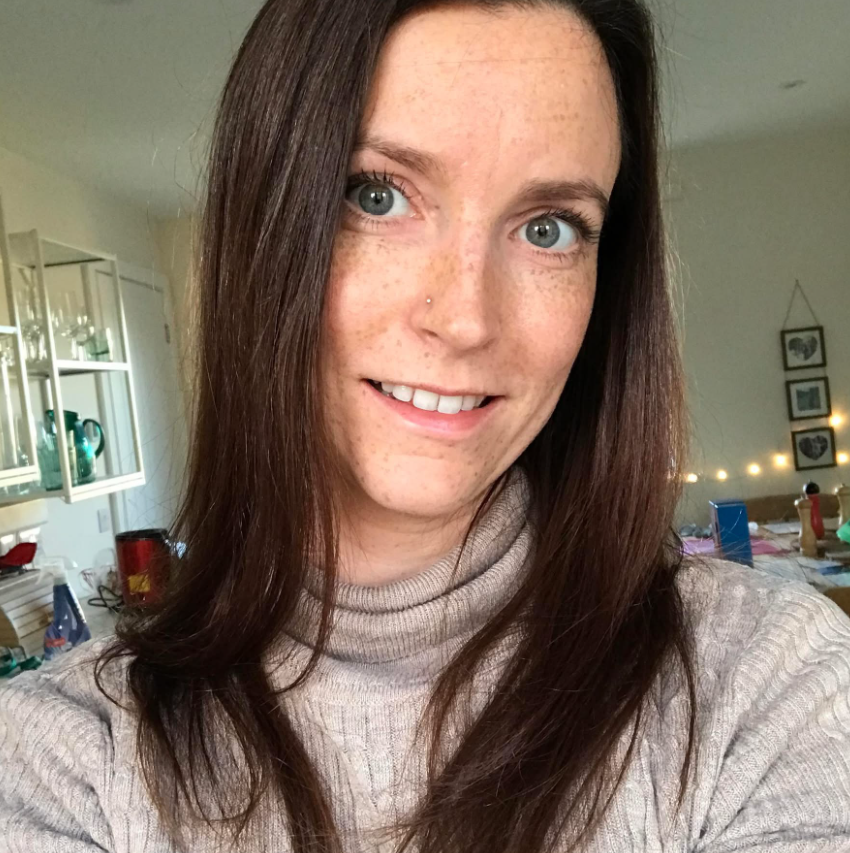
It all started with a change in my speech. I honestly thought I may have suffered a stroke whilst sleeping or something because it suddenly became difficult to articulate certain words and it was quite slurred. This was during my mid – 20s and up to that point I was completely “normal”. Between the ages of about 23 and 28, I started to notice worsening in my symptoms; my voice became even more slurred and slow paced, I would become breathless after speaking for a while, my eyes would struggle to focus and I couldn’t carry a cup of tea without spilling it.
Fast forward to 30, family members were starting to comment and so I went to the doctor and was initially diagnosed with vitamin D deficiency. More tests were done and I was referred to a neurologist who clinically diagnosed me with closely progressive cerebellar syndrome. I then went on to have an MRI where they discovered cerebral atrophy, along with a genetic test confirming a specific diagnosis of ataxia with oculamotor apraxia type 2 (aoa2). This type of hereditary ataxia is very rare and so the understanding behind it is limited, as were my choices of treatment (as is the case with many ataxians).
I was to rely on therapies to help the condition which at first seemed unfair. I have been to physio, seen an occupational therapist and speech and language therapist; all of whom have been helpful. But I am beginning to understand that it is ultimately down to me to do the research, the exercises and just be patient with myself and learn to pace.
I am still learning and exploring thing that make me feel better- even if it is only temporary, but I am hopeful for the future and glad that I have the NAF and other supporters behind me.
When Were You Diagnosed? Which Type (If Known)?
2023, ataxia with occulamotor apraxia type 2 (aoa2)
How Has Ataxia Impacted Your Life?
It’s been an uphill struggle at times, but I am learning to be patient and kind to myself.
What is One Thing You’d Like the People to Know About Ataxia?
We are not drunk despite appearances and we all just want others to be patient and understanding of us, even though sometimes you can’t see our struggle.
Share Your Advice – How Can Others Support Someone with Ataxia?
By being kind and understanding!
How has NAF Helped You or Your Family?
It has given me a place to read other people’s stories and to know I’m not alone.
Disclaimer: The views and opinions expressed in this story are those of the individual member and do not necessarily reflect the views of the National Ataxia Foundation (NAF). Any medical information shared in this story is based on personal experience and has not been reviewed or endorsed by NAF or a medical professional. Always consult with your own physician or qualified healthcare provider before making any changes to your care or treatment plan.
What is Your Ataxia Story?
As an organization dedicated to improving the lives of those affected by Ataxia, we believe that each story has the power to inspire, connect, and empower others. We invite you to share your personal Ataxia journey with us.
Are you here to read the personal stories, but haven’t yet joined as a member? We hope you find comfort in reading about the experiences of others on their Ataxia journey. We invite you to join as a member to receive a new member story each month. It’s free, and you’ll be kept up-to-date on the latest developments in the Ataxia community.
Recent Member Stories

Laura
It all started with a change in my speech. I honestly thought I may have suffered a stroke whilst sleeping or something because it suddenly Read More…

Sandy Wilson
I was diagnosed with SCA1 in 2010, five years ago I had to stop work due to it becoming too hazardous, I lost my ability Read More…
Rochelle
Hi, I’m Rochelle I am 60 years old mother of three adult children and grandmother to 3. All of my life even as a teenager Read More…
William Tartaglia
My story started about four years ago. It has been a long road. Finally on the 13th of August 25 I was diagnosed with Ataxia Read More…
Sarah FitzGerald
In June 2024, I had a massive hemorrhagic stroke caused by an AVM. I was 23 at the time and working out at the gym. Read More…

Luís Frija
I’m 50 years old from Portugal and work in the contact center industry from home. My journey with Cerebellar Ataxia really began in 2018 when I received my Read More…