

Skip to content

The Ataxia Community Comes Together in Orlando April 9–11, 2026 for the Annual Ataxia Conference! LEARN MORE

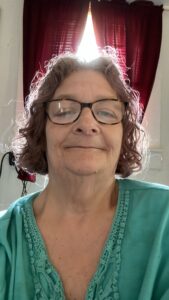
Marina Parker

Oh boy, where do I start? At the beginning I guess…following neck surgery I developed a 4cm abscess on my left prefrontal cortex. I had no symptoms of this abscess until it ruptured. I thought someone shot me in the head. Things get very hazy after this…I remember light hurting my eyes and my head hurt so bad so I went to my bedroom, closed the curtains and that’s all I remember. My husband said when I woke he forced me to wake up the next morning my right eye was drooping.

He took me to the ER where they did a CT scan WITHOUT contrast, gave me 20 Vicodin and sent me home. I took all 20 in 24 hours. Still very concerned he took me to a walk in clinic who referred me to an ophthalmologist who then said I needed to see a neurologist. This is day 6. Because we were getting ready to move back to AZ so I could finish my last semester at ASU we went into my surgeons office to get my records. He took one look at me and said “WTF?!?” He fast tracked me to the ER. I was put in the med/surg ward with a roomate. 

A neurologist came in to do an LP and when I saw that my CSF was brownish orange I knew this was BAD. Very quickly after that a hazmat team came in, gave my roommate shots and transferred to ICU Isolation for 10 days. Upon discharge they put a pic line in which I had for 2 months. The next 8 years were a nightmare of doctors telling me there was nothing wrong with me, it was “all in my head”…they were correct as that is where my brain is. Finally I found a neurologist who actually did a neurological exam, a neuropsych evaluation and diagnosed me with Acquired Ataxia. I was so happy to have a diagnosis but when I asked what next he said “There’s nothing we can do.” Ouch. That’ was 7 years ago and I still have to explain to people that I am not drunk or high but have a brain injury, it’s exhausting. Well, that’s my story.

When Were You Diagnosed? Which Type (If Known)?

2018.

How Has Ataxia Impacted Your Life?

I don’t have words to describe how this has messed my life up, destroyed my dreams, damaged relationships.

What is One Thing You’d Like the People to Know About Ataxia?

It’s an “invisible disease” and because of that we are often judged.

Share Your Advice – How Can Others Support Someone with Ataxia?

Don’t stress them out, it makes it so much worse, be kind and understanding that your loved one did not ask for this disease and did nothing to cause it.

Disclaimer: The views and opinions expressed in this story are those of the individual member and do not necessarily reflect the views of the National Ataxia Foundation (NAF). Any medical information shared in this story is based on personal experience and has not been reviewed or endorsed by NAF or a medical professional. Always consult with your own physician or qualified healthcare provider before making any changes to your care or treatment plan. 

What is Your Ataxia Story?

As an organization dedicated to improving the lives of those affected by Ataxia, we believe that each story has the power to inspire, connect, and empower others. We invite you to share your personal Ataxia journey with us.

Are you here to read the personal stories, but haven’t yet joined as a member? We hope you find comfort in reading about the experiences of others on their Ataxia journey. We invite you to join as a member to receive a new member story each month. It’s free, and you’ll be kept up-to-date on the latest developments in the Ataxia community. 

Recent Member Stories

Tyler

My grandmother died prematurely from ataxia when I was just a baby, 26 years ago. Now today, my aunt has severe SCA and my mother Read More…

Tracy B

My paternal grandfather had a wide gait and difficulty walking and talking. We were told it was like “hardening of the arteries in the brain.” Read More…

Shaun Wesley Best

My Ataxia journey began in 1978, following a three-month coma I experienced the year before, at age 12. Since then, I’ve faced significant balance challenges Read More…

J.C. Myers

Ataxia comes as a dominant gene through my great grandfather, Ernest, my grandmother, Ernestine, and my mother, Leslie. My mother’s brother died young and we Read More…

Susan Harding

I’ve been living with a genetically acquired Ataxia since birth but was only clinically diagnosed in 1992. My mother was diagnosed in 1976. Her brother Read More…

Translate »

Join the Ataxia community today!

Become a free member for exclusive content from NAF.