Skip to content

The Ataxia Community Comes Together in Orlando April 9–11, 2026 for the Annual Ataxia Conference! LEARN MORE

Marius

My Ataxia Journey: Sailing Uncharted Waters

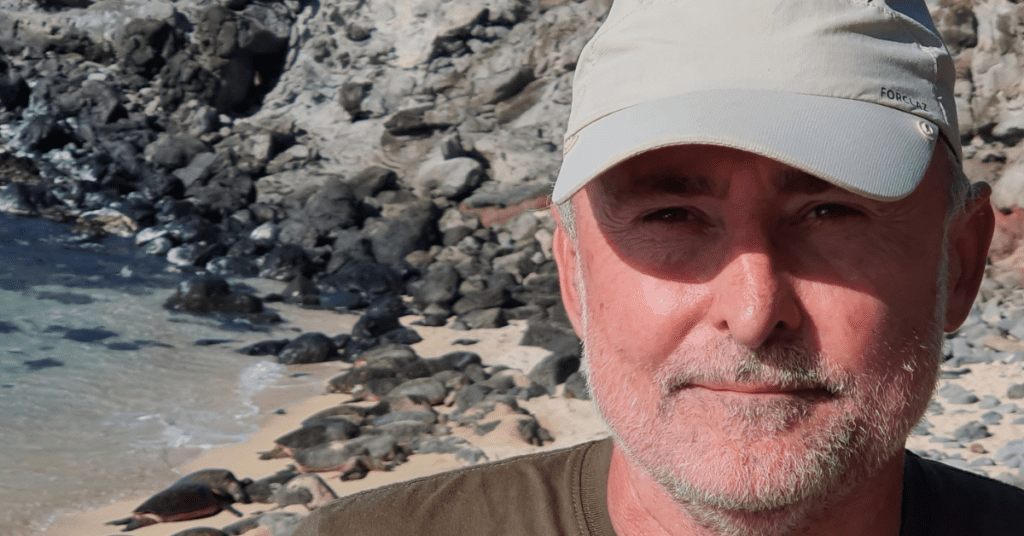
My name is Marius, and I live in Romania. I’m 64 years old, and I’ve always been an active, independent person who enjoyed thinking clearly and moving freely. For over 40 years, I worked as a shipping electrical engineer—until I retired in May 2024.

But over the past couple of years, I began noticing troubling changes: my balance was off, my speech became slurred, my handwriting deteriorated, and I started experiencing overwhelming fatigue. These changes were slow and subtle at first, but they gradually became impossible to ignore. In addition, I’ve been struggling with a very disturbing tinnitus on the right side of my head for over 15 years. Surprisingly, a contrast-enhanced MRI of both ears has shown completely normal results, offering no explanation for the symptom. After a series of MRI evaluations, brain imaging revealed significant cerebellar and pontine atrophy, as well as degeneration of the cerebellar peduncles and the classic “hot cross bun sign,” indicating pontocerebellar tract involvement. However, despite extensive testing—including genetic panels for multiple types of Spinocerebellar Ataxia (SCA1, 2, 3, 6, 7, 8, 10, 12, 17, DRPLA), whole exome sequencing, paraneoplastic antibody screening (antiHu, anti-Yo), vitamin levels, and transglutaminase 6 (TG6) testing for Gluten Ataxia—no definitive diagnosis has been found.

This places me in what some call the “idiopathic” or undiagnosed Ataxia category. I’ve also ruled out other structural or vascular causes through cervical and vertebrobasilar Doppler imaging. While my spine shows some degenerative changes and nerve root compression, these findings don’t explain the neurological symptoms I face every day. Living without a clear diagnosis is one of the hardest parts of this journey. Not knowing the cause—or what to expect—makes it hard to plan for the future. I’ve consulted with several neurologists here in Romania, but my case seems to go beyond what most local specialists can confidently interpret. In the meantime, I try to remain as active as possible. I do daily physical therapy exercises and go to the gym twice a week. I’ve also explored complementary approaches like homeopathy and nutritional supplementation—including omega-3, CoQ10, magnesium, digestive enzymes, and herbal remedies—but so far, I’ve seen no measurable improvement, especially in my balance.

My speech has become more challenging, and I sometimes struggle with coordination and swallowing, but I’m doing everything I can to stay engaged, informed, and connected. By sharing my story, I hope to raise awareness for those of us living with undiagnosed or rare forms of Ataxia. I believe that research, connection, and persistence are the only way forward. I’m still searching for answers—but I remain hopeful.

— Marius

When Were You Diagnosed? Which Type (If Known)?

2023, Idiopathic.

How Has Ataxia Impacted Your Life?

It has deeply affected my personal and family life.

What is One Thing You’d Like the People to Know About Ataxia?

It’s an invisible and progressive neurological disorder that affects every part of a person’s life — physically, emotionally, and socially — even though it might not always be obvious. People with Ataxia may appear “normal” at first glance, but they often struggle with balance, coordination, speech, fatigue, and the fear of losing independence. For patients, it means living with constant uncertainty — not knowing how quickly symptoms will worsen or whether they’ll ever receive a clear diagnosis. For caregivers, it’s a daily test of patience, empathy, and resilience, often without enough support or recognition. Understanding, kindness, and awareness from the public can make a huge difference — not just in terms of emotional support, but also in pushing for better research, resources, and accessibility for those affected.

Share Your Advice – How Can Others Support Someone with Ataxia?

If you’re going through something similar, don’t hesitate to reach out—you’re not alone.

How has NAF Helped You or Your Family?

Joining the National Ataxia Foundation has been a source of strength—I’ve learned so much from reading others’ stories and knowing that I’m not alone, even in uncertainty.

Disclaimer: The views and opinions expressed in this story are those of the individual member and do not necessarily reflect the views of the National Ataxia Foundation (NAF). Any medical information shared in this story is based on personal experience and has not been reviewed or endorsed by NAF or a medical professional. Always consult with your own physician or qualified healthcare provider before making any changes to your care or treatment plan. 

What is Your Ataxia Story?

As an organization dedicated to improving the lives of those affected by Ataxia, we believe that each story has the power to inspire, connect, and empower others. We invite you to share your personal Ataxia journey with us.

Are you here to read the personal stories, but haven’t yet joined as a member? We hope you find comfort in reading about the experiences of others on their Ataxia journey. We invite you to join as a member to receive a new member story each month. It’s free, and you’ll be kept up-to-date on the latest developments in the Ataxia community. 

Recent Member Stories

Tracy B

My paternal grandfather had a wide gait and difficulty walking and talking. We were told it was like “hardening of the arteries in the brain.” Read More…

Shaun Wesley Best

My Ataxia journey began in 1978, following a three-month coma I experienced the year before, at age 12. Since then, I’ve faced significant balance challenges Read More…

J.C. Myers

Ataxia comes as a dominant gene through my great grandfather, Ernest, my grandmother, Ernestine, and my mother, Leslie. My mother’s brother died young and we Read More…

Susan Harding

I’ve been living with a genetically acquired Ataxia since birth but was only clinically diagnosed in 1992. My mother was diagnosed in 1976. Her brother Read More…

Keith Heiken

I am 62 years young. I was diagnosed with SCA8 when I was 24. Dr. Byrd took a skin sample to help with other types Read More…

Sarah Altis

It started about 12 years ago. My dad was diagnosed with Ataxia. I wasn’t really sure what that meant, but I spent the next several Read More…

Translate »

Join the Ataxia community today!

Become a free member for exclusive content from NAF.