
Skip to content

The Ataxia Community Comes Together in Orlando April 9–11, 2026 for the Annual Ataxia Conference! LEARN MORE

Ataxia

Snapshot: What is Statistical Significance?

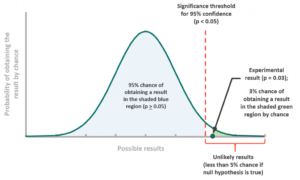
What is statistical significance? Anyone interested in research, be it experiments testing the effects of new medications or studies of human behaviour, is bound to eventually encounter the term statistical significance. Despite being a fundamental feature of research, the concept of statistical significance is often a source of confusion beyond Read More…
Spotlight: The Truant Lab

Principal Investigator: Dr. Ray Truant Location: McMaster University, Hamilton, Ontario, Canada Year Founded: 1999 What disease areas do you research? SCA1 SCA7 Huntington’s Disease Parkinson’s Disease What models and techniques do you use? Human cell biology High content screening Biophotonics Microscopy Research Focus What is your research about? We are Read More…

Spotlight: The Watt Lab

Principal Investigator: Dr. Alanna Watt Location: McGill University, Montreal, Canada Year Founded: 2011 What disease areas do you research? SCA6 ARSACS Aging Basic questions about how the cerebellum functions. What models and techniques do you use? Animal models of ataxia and aging Electrophysiology Imaging RNA sequencing Behavioural assays Research Focus Read More…

You asked, We listened: Introducing SCAsource Spotlights

Hi everyone! This is a quick message from the volunteers behind SCAsource. About a year ago we conducted a feedback study to ask what we were doing well and what we could change or improve. Some of the changes we hoped to introduce back in the spring were delayed due Read More…

Snapshot: What are Intrathecal Injections?

Drug delivery into the body can be achieved in several ways, from applying a medicated cream on the skin, to swallowing a pill, to injecting into a muscle or vein. Each route of delivery should at least achieve one thing – getting the drug to the part of the body Read More…

Snapshot: What is the Blood-Brain Barrier?

What is the blood-brain barrier? Blood circulates throughout the body in tubes called blood vessels, delivering oxygen and essential nutrients to different organs. However, not all things that circulate through the body can get into the brain. The blood vessels of the brain are slightly different. Their walls have a Read More…

Sunrise of Gene Therapy for Friedreich’s Ataxia

Written by Dr. Marija Cvetanovic   Edited by Dr. Ronald Buijsen Researchers from the University of California show they can “edit” the Frataxin gene in human cells from Friedreich’s Ataxia and transplant them into mice. This lays the groundwork for this method to be tested for safety. Friedreich’s ataxia is a Read More…

Repeat interruptions are associated with epileptic seizures in SCA10

Written by Dr Hannah Shorrock  Edited by Larissa Nitschke Repeat interruptions in SCA10 influence repeat tract stability and are associated with epileptic seizures Multiple spinocerebellar ataxias (SCAs) are caused by repeat expansion mutations, but in some cases, these repeat expansions are interrupted. The presence of repeat interruptions can influence disease Read More…

Targeting protein degradation to alleviate symptoms in MJD

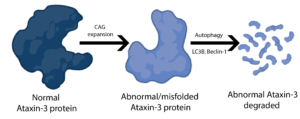
Written by Ambika Tewari   Edited by Brenda Toscano Márquez Trehalose, a natural autophagy inducer shows promise as a therapeutic candidate for MJD/SCA3 Every cell has an elaborate set of surveillance mechanisms to ensure optimal functioning. As proteins are synthesized, errors can occur leading to misfolded proteins. These abnormal proteins can Read More…

Snapshot: What is Polymerase Chain Reaction (PCR)?

Polymerase chain reaction, or PCR, is a commonly used laboratory technique that was invented in the 1980s. The method has many applications in different fields, ranging from identifying individuals in forensic science, detecting pathogens in water supply, and genetic testing in medicine. PCR works by first obtaining a sample that Read More…

Translate »

Join the Ataxia community today!

Become a free member for exclusive content from NAF.