
Skip to content

ACE applications are now open through October 15. Join a national network committed to providing high-quality, comprehensive Ataxia care. Apply Now!

SCA1

New Strategy for Reducing Ataxin-1 Levels Shows Promise

Written by Carrie A. Sheeler Edited by Dr. Ronald A.M. Buijsen RNAi reduces levels of disease-causing Ataxin-1 in SCA1 model mice, easing symptoms of disease when injected both before and after symptom onset. Lowering the amount of the disease-causing mutant Ataxin-1 protein in affected cells and tissues improves symptoms of Read More…
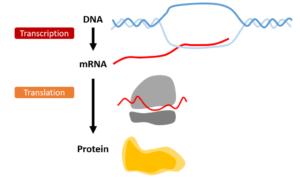

Snapshot: What is RNAi?

RNA interference, or RNAi, is a natural biological process that inhibits the expression of a specific gene. In medicine, targeted RNAi therapies can be used to silence the expression of a disease-causing gene. To understand RNAi, you first have to understand RNA. An overview of  RNA is the messager between Read More…

VEGF-mimicking nanoparticles improve SCA1 disease phenotype in mice

Written by Dr. Chandrakanth Edamakanti Edited by Dr. David Bushart VEGF nanoparticles offer a new avenue for developing treatments for SCA1 and other neurodegenerative disorders Spinocerebellar ataxia type 1 (SCA1) is a neurogenerative disorder with symptoms that typically begin in the third or fourth decade of life. The disease is Read More…

A Combined Approach to Treatment: Targeting PAKs in SCA1

Written by Carrie A. Sheeler  Edited by Dr. Marija Cvetanovic Group 1 p21-associated kinases (PAKs) present a new avenue for SCA1 research. Spinocerebellar ataxia type 1 (SCA1) is caused by a specific mutation in the Ataxin1 gene, which causes the protein that’s made from that gene (also called Ataxin1) to Read More…

Mitochondrial Dysfunction Found in SCA1 Purkinje Cells

Written by Dr. Terri M Driessen Edited by Dr. David Bushart Mitochondrial dysfunction and loss of mitochondrial DNA is identified in an SCA1 mouse model. Spinocerebellar ataxia type 1 (SCA1) is a neurodegenerative disorder that causes cell death in certain parts of the brain. The brain regions affected play important Read More…

Approaching the age of clinical therapy for spinocerebellar ataxia type 1

Written by Dr. Marija Cvetanovic Edited by Dr. Maxime W. Rousseaux New research (published Nov. 2018) reveals promising potential genetic therapy for SCA1. A research team comprised of scientists from academia and industry have tested a new treatment for Spinocerebellar ataxia type 1 (SCA1), bringing disease-modifying therapy one step closer Read More…

Spinocerebellar Ataxia Type 1 is Caused by a Trinucleotide DNA Repeat

Written by Hillary Handler  Edited by Dr. David Bushart How researchers found that SCA1 is caused by an expanded, repetitive DNA sequence – a discovery that has allowed for accurate SCA1 diagnosis and more focused research strategies Before the true genetic basis of Spinocerebellar Ataxia Type 1 (SCA1) was discovered, Read More…

DNA Damage Repair: A New SCA Disease Paradigm

Written by Dr. Laura Bowie Edited by Dr. Hayley McLoughlin Researchers use genetics to find new pathways that impact the onset of polyglutamine disease symptoms The cells of the human body are complex little machines, specifically evolved to fulfill certain roles. Brain cells, or neurons, act differently from skin cells, which, in Read More…

Translate »

Join the Ataxia community today!

Become a free member for exclusive content from NAF.