
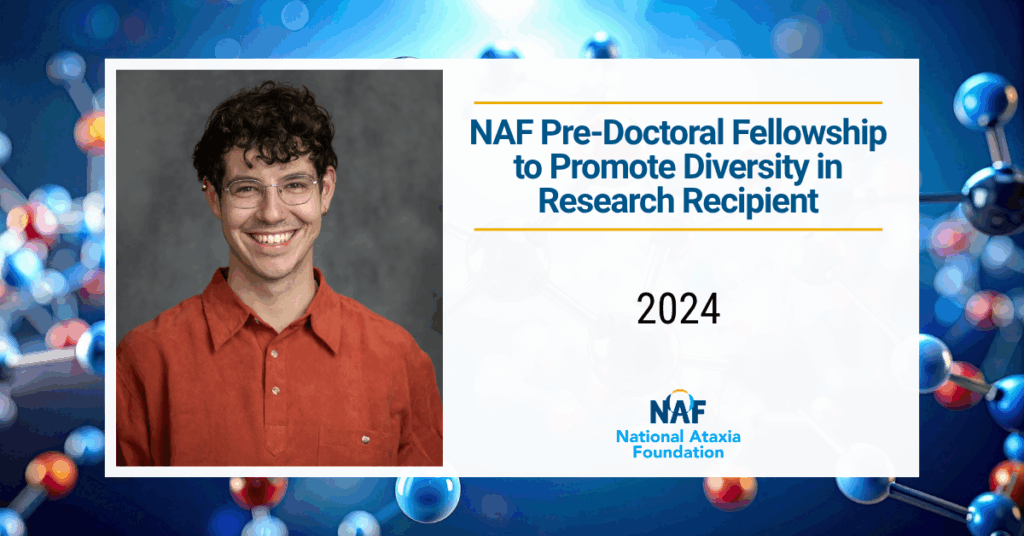
Written by Victoria Martinez
Faces of Ataxia Research highlights scientists whose work is supported by grants from NAF. Each story shows how our donors are fueling discoveries that bring us closer to effective treatments and a cure for Ataxia.
Meet the Researcher
Project title:
Characterizing peripheral neuropathy onset and progression in SCA3 mouse models
Education:
BSc, Binghamton University
Current Position:
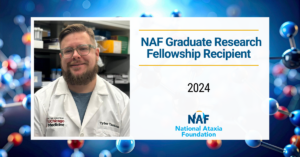
PhD Candidate at the University of Michigan, under the supervision of Hayley McLoughlin, PhD
Path to Ataxia Research
Juan’s journey into ataxia research began when his family moved from Uruguay to New York. He grew up in a Spanish-speaking household that encouraged curiosity and valued learning, an outlook that shaped how he approached school and new opportunities. In high school, Juan realized he enjoyed both psychology and biology and discovered that neuroscience connected the two disciplines, becoming the field he was most excited to pursue.
Juan was drawn to Binghamton University because of its Freshman Research Immersion (FRI) program, which allows students to start research in their first year under faculty mentorship. His first project investigated obsessive-compulsive disorder using a rat model, where he gained experience in behavioral testing and lab techniques. Later, he completed a thesis on how adolescent binge drinking affects cholinergic brain circuitry in the context of Alzheimer’s disease. Cholinergic circuits are networks of brain cells that use the chemical messenger acetylcholine to support learning and memory. These experiences led to Juan’s appreciation of collaborative and problem-solving aspects of science.
At the University of Michigan, where he is now in his fourth year of his PhD program, Juan rotated through several labs before joining the McLoughlin Lab, supervised by Dr. Hayley McLoughlin, PhD. He was excited by the lab’s focus on glial cells within the context of ataxia. Juan was equally drawn to the lab’s supportive culture of mentorship and collaboration. Ataxia research further stood out to him when they remain lesser known despite affecting many patients and having no available treatments. For Juan, this presented an opportunity to make a meaningful contribution to an area that urgently needs more attention.
Focus of Current Research
The McLoughlin Lab studies how both glial cells and neurons contribute to SCA3 pathology. The group compares the distinct and shared roles of these cell types in driving disease, with a focus on repair, immune, and structural processes. Glial cells are non-neuronal cells in the brain and nervous system that provide repair, immune, and structural support.
Juan studies Spinocerebellar Ataxia Type 3 (SCA3) using mouse models to understand both brain involvement and the development of peripheral neuropathy (PN) in SCA3. PN is a condition in which the nerves outside the brain and spinal cord are damaged, leading to symptoms like numbness, pain, and weakness. Juan is investigating which specific cell types in the peripheral nervous system (PNS) are responsible for the nerve damage. He recognized that these peripheral effects are underappreciated and can worsen typical ataxia symptoms. Juan hopes that by studying the disease in mouse models and identifying the cells driving PN, he can uncover treatment targets that reduce symptoms and advance the development of effective therapies.
Why Ataxia Research Matters
Researching ataxia is important to Juan because the McLoughlin Lab has powerful mouse models that allow him to study how nerves are affected by the disease and explore potential treatments. PN-associated symptoms, such as numbness and pain, are underrecognized and often overlooked in clinical data, which makes it difficult for researchers to fully understand the disease. This lack of attention also limits the clinical data available to researchers. Juan’s work highlights these underappreciated aspects of the disease, demonstrating both their seriousness and their impact on patients’ quality of life.
Research Impact on the Ataxia Community
Juan sees his research as part of a larger effort to improve understanding and treatment of ataxia and symptoms associated with the PNS. He wants to reassure patients struggling with peripheral neuropathy, that a lab is actively working to understand these symptoms and explore potential treatments. Juan hopes his work can spark conversation about potentially overlooked symptoms. He aims to engage clinicians and funders, supporting the development of strategies and advocacy that improve patient care and diagnosis.
Advancements through NAF Funding
The research project funded by the National Ataxia Foundation (NAF) allowed Juan to continue studying PN in SCA3 and to characterize its progression in mouse models. These models closely reflected the symptoms seen in patients, including sensory deficits that lead to numbness and coordination problems. Cellular changes such as myelination loss and neuron dysfunction were also visualized in the models. The project provided a foundation for understanding the disease mechanism of SCA3 and identifying potential targets to address PN pathologies.
In addition, the NAF introduced Juan to science communication through SCAsource, a website, run by the NAF, where SCA research is explained in an accessible, non-scientific way for patients and families. This experience gave him valuable skills in making complex scientific findings accessible and understandable to a wider audience. Juan hopes to continue working with SCAsource and initiatives that help communities feel informed, connected and supported in their journey with ataxia.
Bridging Gaps in Knowledge
Juan’s research bridges gaps in current ataxia knowledge by focusing on often underrecognized aspects of the disease, particularly PN. While much attention has historically been on brain and central nervous system pathology, Juan investigates how specific cells in the peripheral nervous system contribute to symptoms like numbness and pain. By characterizing these effects in mouse models, his work provides new insights into disease mechanisms and highlights avenues for treatment. This ensures that PNS-associated symptoms are recognized and addressed in both research and clinical practice.
Career Growth Through NAF Support
Receiving an NAF grant has been pivotal to Juan’s career as a researcher, allowing him to continue his work at a critical stage of his PhD. On a personal level, the grant provided validation that others believe in his ideas and potential. It has also strengthened his credibility, giving him a more robust platform for advocating for patients and their needs. The grant introduced him to opportunities to present his work, create educational materials, and explain ataxia to audiences without a scientific background, making the field more accessible and engaging. Beyond the lab, Juan has discovered that science communication is one of his favorite aspects of research.
Long-Term Goals
Juan’s overarching goal as an ataxia researcher is to understand how specific mutations cause peripheral neuropathy in SCA3, tracing the process from affected cells to disrupted pathways. He aims to map the disease so thoroughly that it forms a clear “mind map” of the underlying mechanisms. If he were a principal investigator, he would dedicate his lab to uncovering the mechanisms behind these peripheral nerve defects.
Juan hopes his work encourages clinicians and the scientific community to look beyond the brain and recognize the importance of PNS symptoms. He also wants to highlight the pain and challenges these symptoms create, which significantly impact the daily lives of people with ataxia.
Hobbies Outside the Lab
Outside of the lab, Juan enjoys staying active and social. He plays volleyball regularly. Juan also enjoys for cooking, often hosting dinner parties where he experiments with Indian and Thai cuisine. One of his favorite Indian dishes is palak paneer, a combination of spinach and soft Indian cottage cheese cooked with spices. In his downtime, Juan likes playing Fortnite, as a fun way to relax and unwind.
Read Other Faces of Ataxia Features
Read Our Latest Blogs