
Skip to content

Join our free Let’s Move Exercise Program! Accessible, expert-led virtual sessions to help you build strength and improve balance from home. REGISTER

Advocating for Accessibility in St. Louis

Guest Author: Shannon Dunphy Lazo

The Advocate Spotlight highlights members of the Ataxia community who are creating change through advocacy, awareness, education, and community involvement. In this series, advocates share the work they’re doing in their local communities and beyond to help improve the lives of people living with Ataxia.

Advocate Spotlight: Shannon Dunphy Lazo

I am one of about 25 people advising the City of St Louis and a local community development organization, Great Rivers Greenway, as a member of the Universal Design Group (UDG). Our Charter states, “Universal Design means designs that allow everybody to go everywhere and enjoy nearly every aspect of a development – to the extent of his or her capacity – and to be able to do so with friends and family, including those who are not disabled,” and we work to “provide recommendations, metrics, strategies, and tactics to achieve a universal and inclusive vision.”  

In other words, we advise on how to make designs for use by anyone and everyone – including us with disabilities. We address inclusivity in universal design and planning. We aim to create spaces that are usable by everyone, with particular attention to the needs of people with disabilities. As the director of the peer-support group, STL Ataxia, I specifically advocate for STL Ataxia and the larger ataxia community. At a very basic level, you might see universal design every day in something as simple as curb cuts and ramps, wayfinding signage, or color schemes- features that affect the Ataxia community. 

Since its start, the UDG has played an active advisory role in providing valuable feedback on a range of city planning and design initiatives. These projects include the development of a sports facility, a museum, greenways, traffic calming strategies, zoning, and the comprehensive 5-year City Plan. Architects and designers often participate in UDG meetings, and as well as hearing our recommendations/concerns, they can answer questions about UD in their projects across the City of St Louis.  

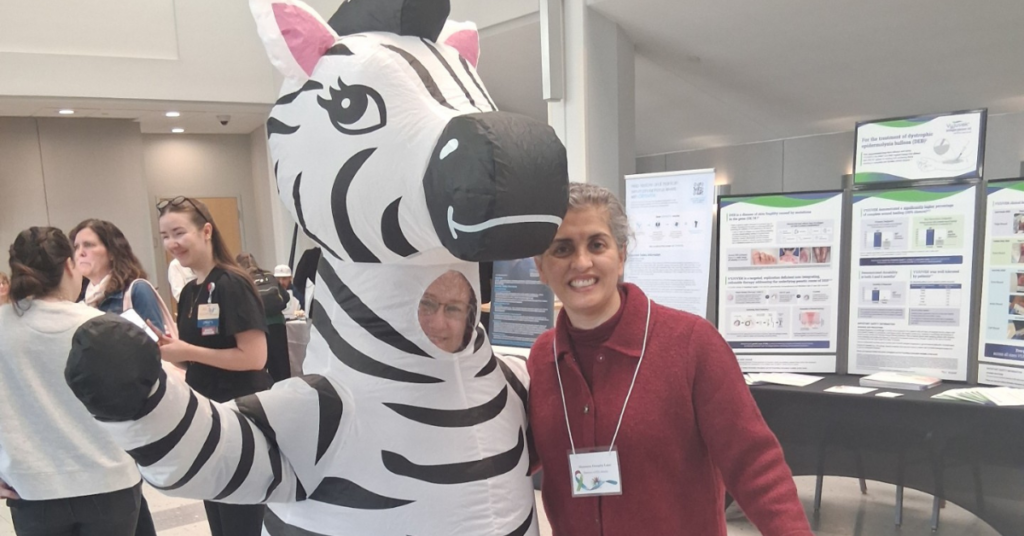
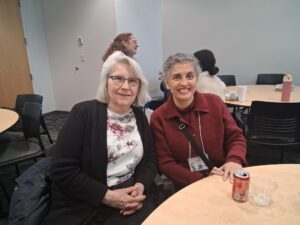
Joan King and Shannon at Washington University in St Louis Rare Disease Day Symposium

Several years ago, St Louis built a new soccer stadium for its new MLS team, St Louis City SC. Outside of the stadium is a public installation that pays tribute to the historic Mill Creek neighborhood that once stood on the site of the stadium. We were brought in to advise on its design. We advised on aspects including reach by wheelchair users, placement of educational panels in Braille and at an appropriate height, font, color/contrast, the dimensions of the water feature, and accessibility of the various parts that allow people to move among and roll in between. 

We also considered the greenway leading up to the stadium, placement of paved areas and grass, audio and visual wayfinding signage and benches, surface materials, pedestrian walkways and bicycle lanes, and soccer fan flow and interaction. 

My advocacy also includes drawing attention to Universal Design considerations for people with disabilities and Ataxians who use durable medical equipment (DME), such as rollators, wheelchairs, mobility scooters, and canes. Ataxians often face additional issues including limited vision, slow and unsteady walking, fatigue, and overstimulation, and my goal is to ensure all these issues are prioritized and receive the attention and consideration they deserve. We strive for proper and inclusive access throughout the city! 

I would suggest to other Ataxians and supporters to contact their local equivalent Office on the Disabled or inquire about community member input with your city. It also pays to network! Participate in expos, exhibit opportunities, or Rare Disease Day in the community, health clinic, or local hospital; you may meet people who can guide you or are looking for input! 

Read Our Latest Blogs

Faces of Ataxia Research: Maria do Carmo Costa, PhD

Written by Victoria Martinez Faces of Ataxia Research highlights scientists whose work is supported by grants from NAF. Each story shows how our donors are fueling discoveries that bring us closer to effective treatments and a cure for Ataxia. Meet the Researcher Project title: Pioneer SCA3 Translational Research Award (2024): Read More…

Ben Williamson

Living and Dying with Spinocerebellar Ataxia Type 7: A Carer’s Perspective Affiliation: Husband and primary carer of patient with confirmed SCA7 (ATXN7 gene, 10/49 CAG repeats) Background Spinocerebellar Ataxia Type 7 (SCA7) is a rare, autosomal dominant neurodegenerative disorder characterized by progressive cerebellar ataxia and cone-rod retinal dystrophy. The following Read More…

Maitreyi Viswanathan

http://youtu.be/sYccDzT25eY?si=f6GkonkY4FvsyFHy The video above is from Maitreyi’s personal YouTube channel, in which she discusses her experiences living with Ataxia. Mature topics are discussed, viewer discretion is advised. When Were You Diagnosed? Which Type (If Known)? Toronto, ON, Canada – SCA Type 2 How Has Ataxia Impacted Your Life? Negatively. This all Read More…

Ana

When I turned 20, I started to notice something was different about me. I had a brain MRI, which showed that I probably had Ataxia. My mom and I went to the doctor for further examination, and he confirmed it. To be 100% sure, they performed genetic testing, which confirmed Read More…

Ataxia Med News – February 2026

This is a periodic newsletter for Ataxia clinicians to keep them up-to-date on patient resources and other medical news. To begin receiving this newsletter, join as a professional member of NAF at www.ataxia.org/JoinNAF. Hello from NAF’s Clinical Services Team Hello Fellow HCP’s, When I think of February, the first thing Read More…

Translate »

Join the Ataxia community today!

Become a free member for exclusive content from NAF.