

Skip to content

ACE applications are now open through October 15. Join a national network committed to providing high-quality, comprehensive Ataxia care. Apply Now!

English

Snapshot: What are Preprints?

Scientific research takes a long time: experiments are performed, clinical trials are run, and the data that’s generated has to be analysed and understood before it can be published. Together, this process does not happen quickly. Though people may not realise it, one step that takes a lot of time Read More…

The importance of balancing Sacsin protein levels in ARSACS

Written by Dr. Ambika Tewari Edited by Larissa Nitschke Tipping the balance of the protein Sacsin alters outcomes in a mouse model of ARSACS There are many different types of ataxia, each with a unique cause. For several ataxias, the mutated gene that causes the disorder has been identified. This Read More…

Snapshot: What are Caenorhabditis elegans models?

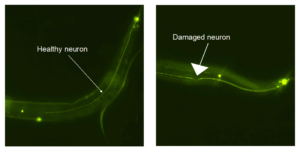
What are C. elegans? If you read the title of this article and had no idea what Caenorhabditis elegans are, you are not alone! Caenorhabditis elegans, more commonly known as C. elegans, are microscopic worms that typically grow up to 1 mm in length. C. elegans are naturally found worldwide Read More…

Gene Therapy Validated In Human SCA3 Stem Cells

Written by Dr. Marija Cvetanovic Edited by Dr. Sriram Jayabal Research group in Michigan report the creation of the first NIH-approved human cell model that mirrors SCA3 disease features – cellular defects that, after gene therapy, show improvement Spinocerebellar ataxia type 3 (SCA3) is a dominantly-inherited, late onset genetic disease Read More…

Snapshot: What are single nucleotide polymorphisms (SNPs)?

It’s in our DNA If you were to unravel the tightly wound packages of our genome known as chromosomes, you would find long strings of DNA. The strings are made up of only four different building blocks, compounds abbreviated as adenine (A), thymine (T), guanine (G) and cytosine (C). Picture Read More…

Working with cerebellar ataxia

Written by Dr. David Bushart Edited by Dr. Sriram Jayabal How can employment be made more accessible for ataxia patients? What barriers exist? A study of workers and non-workers with ataxia analyzes the benefit of employment, as well as how to reduce risk of injury. A job can often become Read More…

Snapshot: What are stem cells?

Embryonic and adult stem cells Stem cells are cells that provide new cells during growth, and replace cells that are damaged or lost during life. They have the following two important properties that enable them to do this: The ability to develop (differentiate) into many other, different cell types, for Read More…

Designing a new “measuring stick” for ARSACS

Written by Dr. Brenda Toscano Márquez  Edited by Dr. Ray Truant ARSACS researchers develop a better “measuring stick”, or disease severity index that can help better assess the progression of motor symptoms and compare different groups of ARSACS patients. How does your doctor know you are sick? In short: measurements. Read More…

Snapshot: What is drug repurposing?

To repurpose drugs is to find new ways that they can be applied to treat other conditions and illnesses. Although our knowledge of diseases is greater than ever before, the development of novel therapies has yet to catch up. Drug development is slow, expensive and risky. These challenges have made Read More…

Translate »

Join the Ataxia community today!

Become a free member for exclusive content from NAF.