

Skip to content

ACE applications are now open through October 15. Join a national network committed to providing high-quality, comprehensive Ataxia care. Apply Now!

English

Snapshot: What is Magnetic Resonance Imaging (MRI)?

What is it? Magnetic resonance imaging (MRI) is a type of technology used to take detailed pictures of the body. It is commonly used to detect abnormalities in the body, diagnose diseases, and to regularly monitor patients who are undergoing treatments. It can generate three-dimensional images of non-bony tissues, such Read More…

Mitochondrially Stressed

Written by Dr. Judit M. Pérez Ortiz Edited by Dr. Brenda Toscano Márquez Scientists describe how SCA2 oxidative stress can affect mitochondrial function, and potentially how to fix it Mitochondrial Stress We all have experienced stress. When cramming for an exam last minute, or getting ready for a job interview, Read More…

Snapshot: What is RNAi?

RNA interference, or RNAi, is a natural biological process that inhibits the expression of a specific gene. In medicine, targeted RNAi therapies can be used to silence the expression of a disease-causing gene. To understand RNAi, you first have to understand RNA. An overview of  RNA is the messager between Read More…

Zapping the brain to help ataxia

Written by Dr. Judit M. Perez Ortiz Edited by Dr. Sriram Jayabal In a new study, scientists have found that “zapping” the brain with an electromagnetic wand may someday help patients with spinocerebellar ataxia. In an era of ever-evolving technological advances used for personal entertainment and space travel, medical scientists Read More…

Snapshot: What is RAN translation?

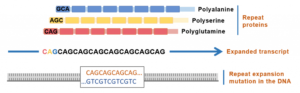
In many diseases caused by repeat expansion mutations in the DNA, harmful proteins containing repetitive stretches are found to build up in the brain. The repeat expansion mutation, when translated into a protein, results in an abnormally expanded repeat tract that can affect the function of the protein and have Read More…

Recovering Purkinje cell health could improve quality of life in SCA3

Written by Jorge Diogo Da Silva Edited by Dr. David Bushart Normalizing neuronal dysfunction in SCA3/MJD by activating a receptor inside cells Spinocerebellar ataxia type 3 (SCA3), also known as Machado-Joseph disease (MJD), is an inherited neurodegenerative disease that typically begins in mid-adulthood. This disease causes loss of coordination and Read More…

Snapshot: What is CRISPR?

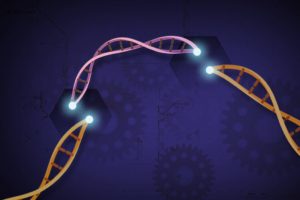
A common nuisance for bacteria is the bacteriophage: a virus that uses the internal machinery of a bacteria to replicate its own genetic material. Bacteriophages do this by latching onto bacteria and injecting their DNA into the cell. As the cell grows and divides, the bacteriophage’s hope is that their Read More…

Non-invasive imaging of neurodegeneration in live animals

Written by Dr. Marija Cvetanovic   Edited by Larissa Nitschke Purkinje cells (a type of neuron in the cerebellum) are the most vulnerable cells in many Spinocerebellar Ataxias (SCAs). While animal models of SCA have been very fruitful in understanding the mechanisms of Purkinje cell neurodegeneration, none of these models have Read More…

Snapshot: What is RNA?

RNA is an important molecule that helps with regulating the function of cells. To fully understand how RNA fits in here, we must first look at the bigger picture: genetics. The central dogma of molecular biology, depicted below, states that DNA is copied (transcribed) into RNA, which is later decoded Read More…

Translate »

Join the Ataxia community today!

Become a free member for exclusive content from NAF.