

Skip to content

ACE applications are now open through October 15. Join a national network committed to providing high-quality, comprehensive Ataxia care. Apply Now!

English

How an ataxia gene increases the risk for Alzheimer’s disease

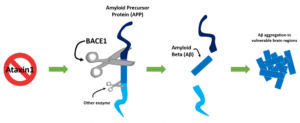
Written by Dr. Judit M. Perez Ortiz Edited by Dr. Marija Cvetanovic In a tour de force study, a collaborative team of scientists led by Dr. Rudolph Tanzi (Harvard Medical School) and Dr. Huda Zhogbi (Baylor College of Medicine) found a novel relationship between the Spinocerebellar ataxia type 1 gene (ATXN1) Read More…

Snapshot: How does CAG tract length affect ataxia symptom onset?

The instructions our bodies need to grow and function are contained in our genes. These instructions are made up of tiny structures called nucleobases. There are four types of nucleobases in DNA: adenine (A), cytosine (C), guanine (G), thymine (T). By putting these four nucleobases in different orders and patterns, Read More…

Two or more birds with one stone: Designing a single therapeutic strategy to treat multiple types of spinocerebellar ataxia

Written by Dr. David Bushart Edited by Dr. Hayley McLoughlin A newly-proposed treatment strategy might be effective against several forms of spinocerebellar ataxia and other CAG repeat-associated disorders Upon receiving an initial diagnosis of spinocerebellar ataxia (SCA), a swarm of questions might enter a patient’s mind. Many of these questions Read More…

Eyes: Windows to peek at brain function in spinocerebellar ataxias

Written by Dr. Sriram Jayabal Edited by Dr. David Bushart Eye movement deficits occur ubiquitously in spinocerebellar ataxias, even at early disease states, highlighting their clinical importance. Imagine the different motor movements that you make in your everyday life. Many people think of actions that we perform using our hands Read More…

New Strategy for Reducing Ataxin-1 Levels Shows Promise

Written by Carrie A. Sheeler Edited by Dr. Ronald A.M. Buijsen RNAi reduces levels of disease-causing Ataxin-1 in SCA1 model mice, easing symptoms of disease when injected both before and after symptom onset. Lowering the amount of the disease-causing mutant Ataxin-1 protein in affected cells and tissues improves symptoms of Read More…

Snapshot: What is recessive ataxia?

What is a recessive disorder? A recessive disorder is one that has a specific disease mechanism. For a recessive disorder to occur, both copies of the causative gene must be mutated for a patient to show symptoms.  Ataxias that follow this disease mechanism are known as recessive ataxia. However, having Read More…

Huntingtin: a new player in the DNA repair arsenal

Written by Dr. Ambika Tewari Edited by Dr. Mónica Bañez-Coronel Mutations in the Huntingtin protein impair DNA repair causing significant DNA damage and altered gene expression Our genome houses the entirety of our genetic material which contains the instructions for making the proteins that are essential for all processes in Read More…

Translate »

Join the Ataxia community today!

Become a free member for exclusive content from NAF.