
Guest Author: Pinalben “Pinky” Patel
My vision has never been 20/20. Okay, maybe it was up until my preteen years. This disease I have affects the eye muscles and nerves as well. In honor of the ADA anniversary, I’m sharing this article previously published in Breath & Shadow magazine. I think I might have been legally blind then. But I couldn’t just cry about my Optic Nerve Atrophy because my whole body was degenerating.
ADA, the Beautiful!
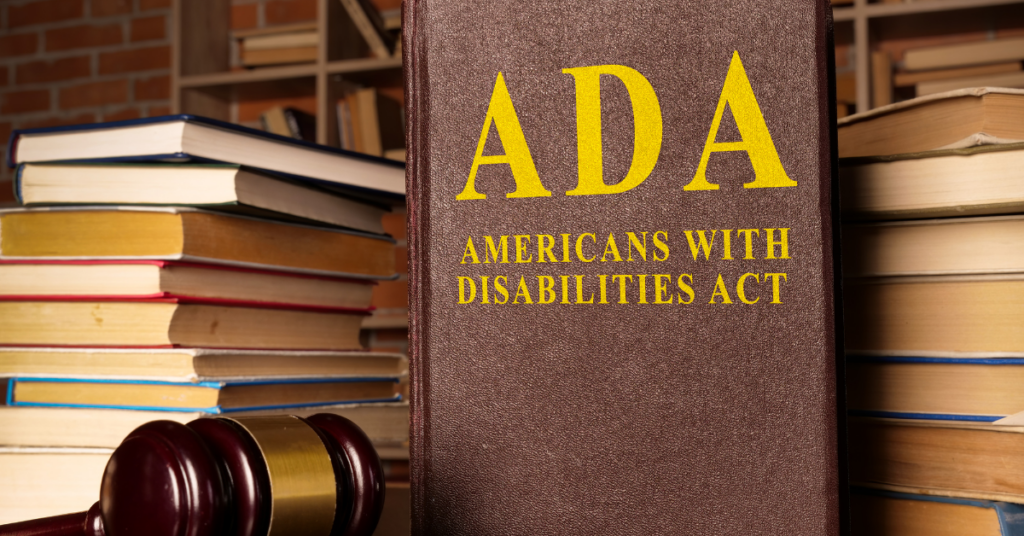
A social worker in my town asked me to write a speech about the benefits of the Americans with Disabilities Act (ADA) to present at a rally celebrating its anniversary. When I discussed this with my wheelchair using friends, some of their replies shocked me.
Many of them agreed with me that while the ADA could use improvements, it has been very useful for people with disabilities. Some, however, believed the ADA had no positive effects. This struck me as ungrateful, but I realized that they just didn’t have experience living as a person with a disability before the ADA.
The ADA has always been about giving equal access to people with disabilities. It was signed into law July 26, 1990, with great support from both parties and the president. Before the ADA, people with disabilities were not able to participate in the community unless they were wealthy enough to have attendants around all the time to lift them over stairs or barriers to get into buildings.
I was born in India. My family and I came to the United States when I was four years old, but we had to return to India when I was twelve. I had been diagnosed with Friedreich’s ataxia, a genetic degenerative neuromuscular dieses, when I was nine.
Three years later when I was forced to drop out of school in India; I realized the importance of the ADA. My disability had progressed and I couldn’t walk with a person holding me anymore. I needed to use a wheelchair. Most schools where I lived were several stories high, without elevators or ramps.
The school I attended offered to have some janitors to lift and get me into the building, but transportation was still an issue. Considering ramps and elevators were not available in public places, accessible transportation was unthinkable. The school bus driver complained about helping me in and out of the bus. He told my parents that I didn’t need an education since I was “handicapped.” My parents considered private bus transportation, but it was too expensive.
Luckily my family got a chance to come back to the United States two years later. I started school again and eventually finished high school. In 2007 I graduated with a journalism degree from Murray state University!
I know I wouldn’t have been able to continue my education if not for the ADA. Even though my voice is weak, I am able to communicate effectively and coherently due to my studies. I am grateful to leaders of the American’s With Disabilities Coalition such as Ed Roberts, Gini Laurie, and Justin Dart who pushed for the ADA to be signed into law. As a result, I can go to many more places–stores, restaurants, theater etc. in the USA.
I last visited India in 2004, and there was nothing equivalent to the ADA yet. In a city famous for its malls, I had to do my shopping from the car. There was only one store I could go in, but I still had to be lifted over a step. That store had two floors, and of course I didn’t get to go upstairs.
The accommodations required by the ADA make living with a disability easier. But there are still more improvements to be made. Twenty-years after the ADA went into effect, many buildings and public places remain inaccessible. Some politicians still want to exempt private businesses from ADA requirements. Many architects mistakenly think putting grab bars in bathroom stalls or changing rooms for able-bodied people makes them accessible. Those architects should spend a couple days in a power wheelchair.
The ADA is not just about wheelchair access. People who are blind or visually impaired need computers with accessible programs, as well as accessible web sites that work with screen reading and screen enlarging software. People who are hearing impaired need things like flashing light alarms in case of a fire.
The ADA is a Civil Rights law for people with disabilities. We are a protected class and the largest minority in this country. In its twenty years, some politicians and Supreme Court cases have tried to weaken the ADA.
Even though the ADA has made it illegal to deny employment because of a disability, discrimination is often difficult or impossible to prove. Countless among the disabled population are educated and unwillingly unemployed.
My friends who disagreed with me need to realize that the ADA will never be perfect, especially since there are so many different disabilities and unique circumstances. We need to keep fighting for our rights and stand up to injustice and discrimination. Equal rights and opportunity are indeed beautiful ideals, and the ADA has made them easier to achieve.
Learn More About the ADA
These resources will help you learn more about the American with Disabilities Act:
- ADA National Network – Information on disability rights, accommodations, employment, transportation, and accessibility.
- Americans with Disabilities Act of 1990 – Learn about the history, protections, and ongoing impact of the ADA.
- Disability Rights Education and Defense Fund – Resources on disability rights and advocacy.
Get Involved in Advocacy
The ADA was made possible because people with disabilities and their allies spoke up and demanded equal access. You can continue that legacy by:
- Participating in NAF advocacy initiatives and action alerts.
- Sharing your story with policymakers to help improve disability and rare disease policies.
- Meeting with elected officials during advocacy events such as Hill Day.
- Encouraging accessibility and inclusion within your local community.
Thank You, Advocates!
As we celebrate the anniversary of the Americans with Disabilities Act, we honor the advocates whose determination helped create a more accessible and inclusive society. Their work reminds us that progress is possible when people come together to advocate for change. While important challenges remain, each of us can play a role in advancing accessibility, inclusion, and opportunity for all people living with disabilities. Through community engagement, education, and advocacy, we can continue building on the ADA’s legacy for future generations.
Disclaimer: Always seek the advice of your physician or other qualified health care provider with any questions you may have regarding a medical condition or treatment and before undertaking a new health care regimen, exercise, treatment, or nutritional supplement.
About the Author
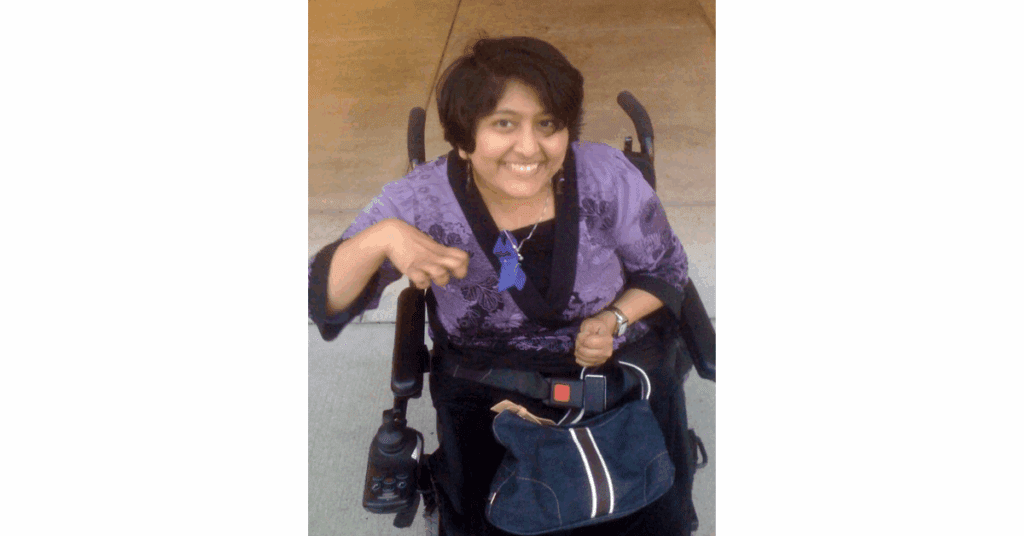
Pinalben “Pinky” Patel is an author who has written a number of books. She was diagnosed with Friedreich’s Ataxia (FA)when she was almost 11 years old, and has been using an electric wheelchair from age 16. Check out her books below.
- As Life Went On
This autobiography, available as a Kindle book, paperback, and hard-cover book, contain details about Friedreich’s Ataxia (FA). FA is a rare degenerative disease. Pinky says, “My passion for writing stems from the fact that I was raised in a culture where looks were more important than feelings. Having a progressive disorder requiring me to stay at home in my adult years, I tried to change what was ingrained in me the best I could and raise awareness about that deceiving disability.” - Caste Aside
This novel, available as a Kindle book and paperback, has information about my diseases in dialogue. A tear-jerker with comical moments set in Australia, this multicultural romance novel can take your mind off the long day! - Life without Love Is Impossible
This Book of poems, which is only available as a Kindle book, inspires love. All Kindle books offer free text-to-speech, free samples, and the Kindle app is free.
Read My Past Articles:
Read Our Latest Blogs